Here are some articles that are Still Up on Saubier

Terrific Twenties​


"The Terrific Twenties"

By Todd Kindler


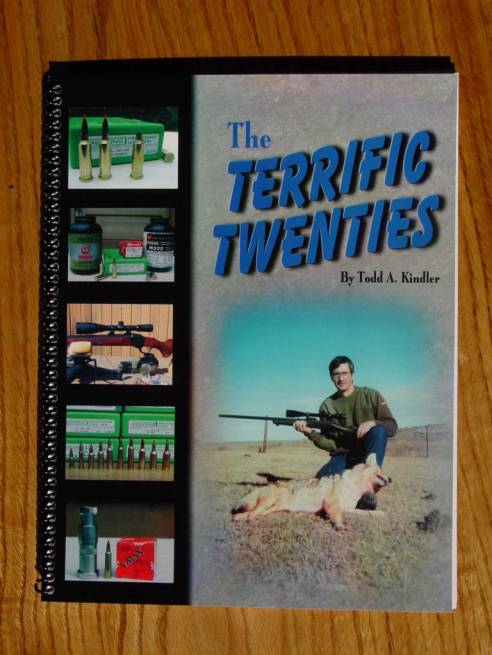
Now available from the Woodchuck Den is the twenty caliber load manual, which is actually more than just a load manual. Various articles and stories are interwoven amongst load data. 60 pages long, including cartridge specs (reamer prints) for all of the .20 caliber cartridges covered. Very nicely assembled. A picture below shows the cover.
terrif1.jpg

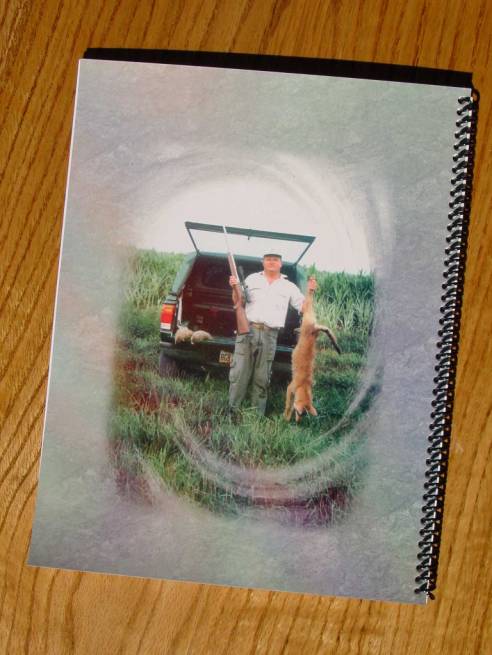
Now for a picture of the back of the manual shown below.
terrif2.jpg

The first edition of this manual was just completed late in late may 02. The cost of the manual was $33.00. I have made a habit out of getting any load manual available for the small calibers and my collection now has manuals from Dick Saunders, Bill Eichelberger, and 2 from Todd Kindler. I have to say that this is the nicest manual that I have now. If you are remotely interested in a .20 caliber project, be sure to get this manual.
 

.17 Jet Project​


Several things got me interested in the .17 Jet but mainly the .17 Caliber load manual from Dick Saunders. Dick developed the .17 Jet or .17-32 Jet as he calls it in his manual. He actually experimented with a couple of versions of this case, but settled on the one that it is currently chambered for by Bullberry (and others) and is referred to as just the .17 Jet. The RCBS die set that I have has the caliber listed as .17 Super Jet.


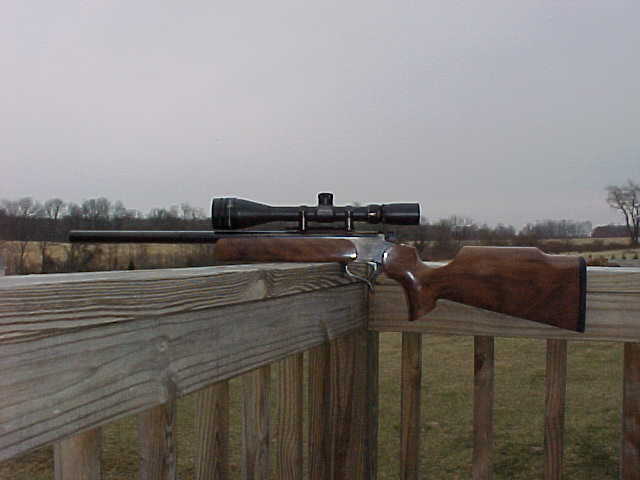
This project is well under way and I hope to have it submitted for print in Small Caliber News by the Fall of this year (2001). I have included a picture of the rifle, which is on a contender frame that has had the trigger pull weight reduced to just over a pound. The barrel was made my Bullberry and is 21" in length, no taper (bull), and gloss blue finish. The stock set was also made by Bullberry actually Woodsmith but I consider them the same. The finish on the stock set is the durable epoxy finish and it is a gloss finish. The wood is a lighter color, lightly figured walnut. The stock has a high comb for use with the scope and a pronounced palm swell. The scope that I chose for this gun is a Sightron 4-16 power scope with target knobs and an adjustable objective.


Image89.jpg


I have formed 250 brass for this gun and am excited about what it has to offer. I have been told that it will safety push 25 grain bullets at 4000+ fps with a very modest amount of powder. I hope to find out soon and I plan on sharing my result with you then. If you want to see what the case looks like, there is a picture of it in my Small Caliber Cases Wanted page. If you would like to read more about this, you will need to wait until it comes out in Small Caliber News. If you have specific questions on this cartridge, feel free to e-mail me. jim@saubier.com

So I've got dies for this cartridge.
Ive tried several times to form a case or even one close to being ready to fire form.
Ive tried using my 22 jet improved case but the shoulders give out before you can get really anything formed.
Even getting to 20 cal doesn't work.
I'm assuming prolly need to start with the 22 jet original design, with the long taper?

Anyone shoot this. Maybe in the future I'd like to build one.
 
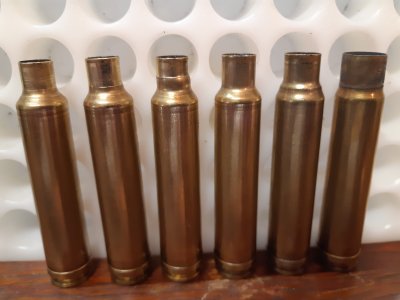
The easy way to size is to run the case throught the 20 cal SEATING die first, then the 20 cal jet fl die, then the 17 SEATING die, then the 17 neck or fl die.

I have taken 460 Bee down to 338-378 using that method, and many other large step downs. I make 17 FB fromm 223 and 17 HH from 22 H the same way. I don't own a set of forming dies for anything.

Do not anneal before sizing or the shoulders and shoulder case junction will be too soft and collapse. Anneal after sizing.

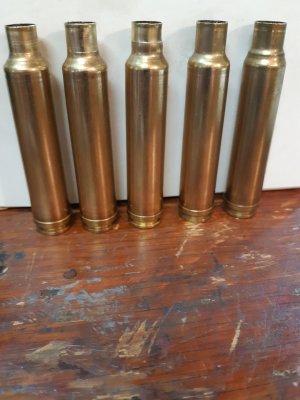
From right to left: 460 Bee case, 378 seat die, 378 fl die, 338 seat die part way, 338 seat die rest of the way, 338 fl die.

20210303_122636.jpg20210303_122400.jpg
 
Last edited:

Terrific Twenties​


"The Terrific Twenties"

By Todd Kindler


Now available from the Woodchuck Den is the twenty caliber load manual, which is actually more than just a load manual. Various articles and stories are interwoven amongst load data. 60 pages long, including cartridge specs (reamer prints) for all of the .20 caliber cartridges covered. Very nicely assembled. A picture below shows the cover.
terrif1.jpg

Now for a picture of the back of the manual shown below.
terrif2.jpg

The first edition of this manual was just completed late in late may 02. The cost of the manual was $33.00. I have made a habit out of getting any load manual available for the small calibers and my collection now has manuals from Dick Saunders, Bill Eichelberger, and 2 from Todd Kindler. I have to say that this is the nicest manual that I have now. If you are remotely interested in a .20 caliber project, be sure to get this manual.
I had that version of the Terrific Twenties, I ordered it and the .17 manual at the same time and as coincidence would have it when Todd signed and dated them the date was my birthday, regretfully I only have the 17 cal manual from that set I loaned the 20 cal manual and it never came back.
So I ordered another set and got latter issues of them.
 
Thanks for resurrecting these! I’ hoping that you can fond and post the bullet swaging thread by Stephen Perry?

Don't know if this is the info you are referring to but I did find this that Stephen Perry wrote.

https://forum.accurateshooter.com/threads/bullet-making-newer-stuff.1227219/page-2

Link to all Stephens posts on Accurate Shooter.

https://forum.accurateshooter.com/search/1594938/?c[users]=StephenPerry&o=date


Bullet Making

The Idea
Some people in benchrest feel a need to have control over part of the Sport. The part I wanted some control over was bullet making. After several intense years of benchrest I added up my bullet boxes. In 5 years I had gone through 50,000+ bullets, 22's and 6's. A thought crossed my mind if I invested the same money I would have spent on the next 50,000 bullets I could buy most of my own bullet making gear.
The Equipment
I started with what I could afford. I needed a source for good equipment. Some say don't buy used I say why not. I know several guys that bought all new and sold it all. Now it is used equipment. The guy that bought the stuff has some good stuff at a good savings.
I have bought all my dies and presses from the same guy. No name needed but he is a HOF shooter that has made and shot his own bullets exclusively for over 20 years. He told me when you start making bullets stop buying others. Live with what you make. He was right.
I started with 1 Rockchucker Press and a set of Simonson 6mm dies in 1997. My source picked me out a core seating punch telling me it was a good size. He also told later to get a few others a 1/2 thou over and under. So far I have lived with the first punch.
Since I live 700 miles from my source a lot of time was spent on the phone getting pointers. It helps to have a mentor when learning bullet making. I spent alot of time going through my magazines looking for bullet making articles. I found several good ones in Rifle and PS mags. I will gather them together again and let you know where. A quick one to find is in the Benchrest Shooting Primer by Don Rorschach. Don covers everything here. My 2nd set of dies are Rorschach 22's.
Ideally you would like to have 3 presses one for each die. But I couldn't afford that set-up in the beginning. So for the first 6 years I used one Rockchucker press changing dies and adjusting my ejector for each die. I bought the Rorschach dies in 2001. Now I had 6 dies and 1 press. Lots of bruised knuckles. About this time I had a chance to purchase a set of Walter Caraway bullet boards at a good price. This brought some civility to my bullet making. Now I could go in my library room and fill trays with jackets and drop cores in them without much effort. Speeds up the bullet making operation.
Finally in 2003 my source found me 2 more presses. I skipped the Cactus Shoot for a year to make the buy. My friend Gene DeLoney paid the money and hauled them back for me. I was set 3 presses and 6 dies. Now I have 3 RCBS presses - 2 Rockchuckers and a RCBS A2. Scrub your presses down first before using them, start clean stay clean. Bullet making presses must be modified for bullet making. The rams must be modified to hold the punch. An ejector assembly must be made to eject the core, jacket in core seating, and the bullet. Also the handle as it contacts the press must be relieved to allow the handle to cam over. Walt Berger told me I needed more cam over in my presses at SG 2 Benchrest School last April.
You need a working area for bullet making. Ideally mount all your presses on a steel table. This provides a rigid base and a good clean-up surface. I don't have such. What I do have is a wood box open on 1 end made out of 3/4" plywood with a 1 1/2 front. I use 3/8" aluminum plates under 3/4" wood on my side presses to provide rigidity and mount my point up press directly to my box where I have the 1 1/2" wood. Works great.
Most of the torque comes when I point up the bullets. I bolt my 1st RCBS press on the open end of the box. I mount my core making RCBS press on the right side and my core seating RCBS A2 press on my left side. I have 2 core cutters. I use my CH core cutter for 6 cores and my other for 22's. Actually my custom cutter does both. I have 2 shelves in my box. Here I store jackets, containers, my bullet boards, and that's it.
Tools
One thing I want to stress here. You must have dedicated tools in bullet making. I have a wire cutter that never leaves my box. I use 3/4" open end wrench for my punch holders. I keep a 1/2" wrench for my ejector nuts. I keep a 3/8" wrench for my A2 ejector nuts. A screw driver for my A2 punch holder. You need the correct size Allen wrench for your lock rings. All these are part of your tool kit and should never leave the area.
The Components
All that a bullet is made up of is a lead core and a bullet jacket. Add about 6-8 hrs for every 1000 you can shoot for a month. I have seen lately BR 6 mm bullets are up to $230/thou. Seems like many will keep saying saying bullets are still the best bargain in the benchrest world. Could be but only because of what it would cost to tool up to make bullets. About $5000 new.
To start with you need to buy jackets. You need to buy when they are available. Being on a order list is bad planning unless you have a backstock and are ordering to keep thus. I started out buying a bucket or 2 usually not the same lot. About 5 years ago I got lucky Stu Harvey and I split an order of 50,000. Neither one us needed that many, both of us having a substantial back stock, but the price was right, the jackets were 1's, and timing was perfect. I haven't used any of that order and I don't think Stu has either. Two years later you couldn't buy jackets. Jackets are all bought from J4 initially and later to those they distribute to. A 22 bucket of .705 jackets contains 2200. A 6 bucket of .825 jackets contains 1800.
Lead wire or wire as it's known is not hard to get but why wait and pay more for each 25 lb roll. I bought 8 rolls from Lester years back and still have 9.
Core Cutting
This step is not done by some. Some bullet makers buy formed cores. Others, probably most make their own cores. I make my own cores. To start with a roll, lets say 10 pieces of wire about 30 bullets in each. I pull the length of my top which I cut with my wire cutter, lead is soft. Next roll each piece on a flat table to get them somewhat straight. The next step is my own don't know if anybody uses it, don't care. I take a paper towel spray it with silicone and pull each wire through it before cutting. For 10 wires several towels are needed. I do this because it cleans the wire and leaves a minimal amount of silicone on the cut cores, good for the core forming operation. All my cut cores are dropped into a stack of empty jacket containers. In the top container I place a paper towel in the bottom to keep the cores from bouncing out after I cut them. Cut all the cores in one sitting. I can cut 10 pieces of wire in 20 min. After I cut the cores I weigh them. Cut cores weigh .68lb/100 to make 66 grn 6 bullets. I do this to get an idea how many bullets I can make. I gather the cut cores up on clean paper towels doubled and proceed to the core forming operation.
Core Forming
Now I have my die set to squirt cores. My Simonson has 2 squirt holes. My Rorschach has 3. You need to set your die to get a good squirt. Walt says 3 grains. Now what I do is squirt cores placing them in a new styro cup. Probably take 3 or 4 cups for 10 wires. This goes quick but be careful not to get your finger between the punch and the die it can hurt. If you want weigh the formed cores, .62 lb/100 for my 6mm bullets.
This goes for all your presses set your ejectors with the punch down so that when the punch goes in the die the ejector will push it out each time. Very important nothing needs to get stuck in the die.
Cleaning & De-greasing Cores
This is a necessary step. Different ways same result, clean. First I will go over my way and then a few others.
What I do is I dump all my cores in a cone shaped sieve. Anything that drains will work. Now I dump a good amount of rubbing alcohol on the cores shaking and adding more alcohol. I do this to get all the small pieces of lead and whatever is on the cores. Now I take a medium sauce pan fill it 1/2 full of hot water add a good amount of white vinegar and add the cores. The vinegar cleans the cores and helps in the oxidation. Swirl the cores around several times. Let sit for 20 minutes. Then I drain the cores back into my sieve and flush with water for 5-10 minutes, I use the sink flush hose. This needs to be done to keep the vinegar from continuing the oxidation process. You want the oxidation to make the cores adhere to the jacket but not in excess. After flushing I drop the cores on a towel on my pool deck and let them dry for 20 minutes. If foul weather they will dry inside just slower.
Other ways guys clean cores are chemicals, Coleman fuel, tsp in boiling water, unknown stuff. Clean is clean whatever way you get there.
 
Last edited:
Stephen Part 2
Core Seating
After I have loaded my bullet trays with jackets stuffed with cores I proceed to my A2 press. Here is what most consider the determining factor in making good bullets. After you select a punch that matches with the lot of jackets you have begin by washing your hands. I keep a box of sanitized towels and clean my hands often while making bullets. You need some coordination in bullet making. Whatever hits the ground stays on the ground no 5 second rule in bullet making. To seat cores you must be able to pick the jacket up turn it upside down holding the core in with your finger. Takes a rhythm. Let the press do the work. No need to slam the handle home your working on a compound leverage press.
You need to set your die so that you get maximum expansion on you jacket while core seating. Use a micrometer to check. You should see a ring of bleed-by lead inside a seated core jacket.
Lube
Next you need to the lube the jackets before the point-up. Again several ways to do this and several lubes. I make a lube that is 3 parts anhydrous lanolin, 1 part Vaseline. Walt uses the same without the Vaseline. Some have a special formula. Point is whatever lube you use keep it to a minimum. Too much or too little lube affects the final dimension of your bullet. Some use a tumbler I use a 4 qt mason jar and shake. Same result.
Point-Up
Time to complete the bullet. You can load up your bullet boards again if you want. Here again develop a smooth stroke in pointing bullets. One stroke no stopping. This goes fast. For the first couple bullets rub a small amount of lube on the bullet to get the die prepped. I know a great bullet maker that would make 75 bullets before he started on his BR bullets. He did this to warm up the dies. The first 75 were sold as Varmint bullets. I don't do this. I leave the lube on my finished bullets.
Set your die up to close the point. Too much closing and the jacket material starts moving up the ejector hole. A small hole is fine not going to affect the way the bullet shoots.
Packaging & Record Keeping
You can use the empty bullet boxes you've collected. Sometimes I do. But what I have done lately is go to my 99 cent store and buy packs of small plastic containers, they hold 300 bullets.
I keep records on such things as lot of jackets, date bullets made, core weight, finished bullet weight, bullet measurements on shank and at pressure ring, performance and load development. Doesn't hurt to keep records.

This is in no way the drop dead bullet making treatise. But it works. Guys that do bullet making for a business probably have different ways. Looking forward to hearing from R.G. Robinett here. I too want to learn more about bullet making. Check 6mmBR.com in the Articles Archive for the San Gabriel BR School pics of Walt Berger and myself teaching bullet making. You will see my bullet making box I described and my RCBS presses.
Let it be Said. Let it be Done.
Stephen Perry
 
This is great! Thanks. This may have been the beginning of a 50 page thread, but it is great! RIP SP!

I also found this older thread on accurate shooters-if allowed.
 
Hey Dean. I'm not sure if those articles can be reposted on here without running into some copyright issues. Jim and the writers own whatever was posted over on Saubier (or any other site). Without express permission to use them, I don't feel comfortable posting them on here. Now, having a thread with links to important posts or articles that direct people to the original site's posts are completely fine.

If anyone is still in contact with Jim Saubier and wants to reach out, I'd be okay with that. I'll leave this post up for a bit, while we try to get the permissions.

Thanks!

Eric Mayer
 
Hey Dean. I'm not sure if those articles can be reposted on here without running into some copyright issues. Jim and the writers own whatever was posted over on Saubier (or any other site). Without express permission to use them, I don't feel comfortable posting them on here. Now, having a thread with links to important posts or articles that direct people to the original site's posts are completely fine.

If anyone is still in contact with Jim Saubier and wants to reach out, I'd be okay with that. I'll leave this post up for a bit, while we try to get the permissions.

Thanks!

Eric Mayer
I sent Jim an email at the old address I had for him
 
Back
Top