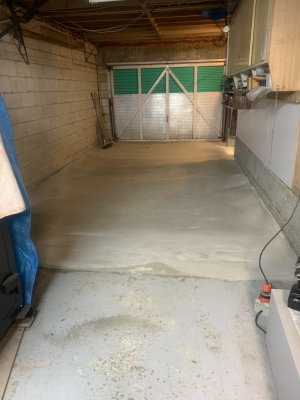
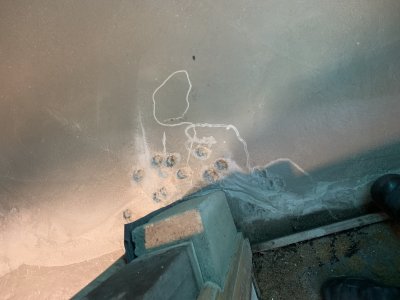
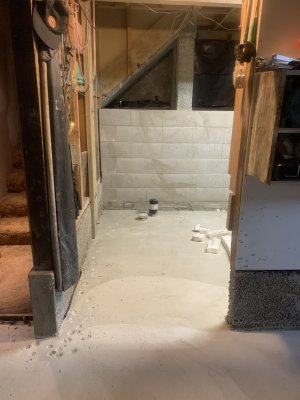
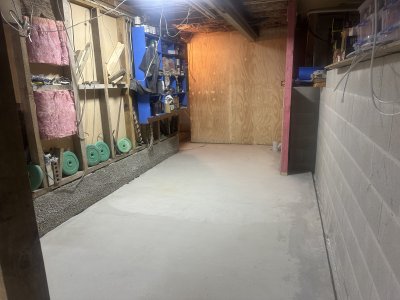
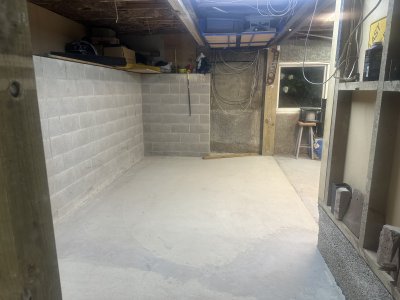
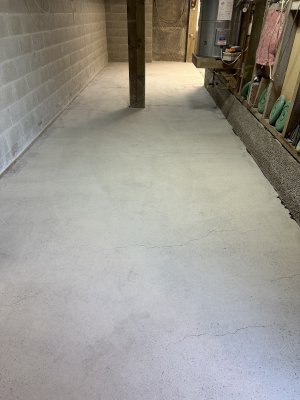
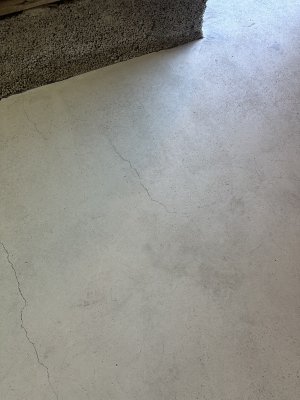
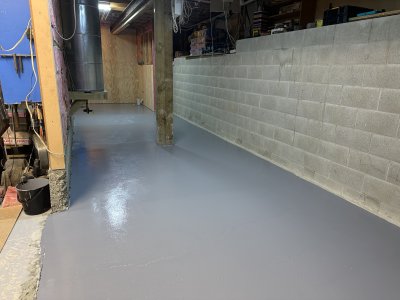
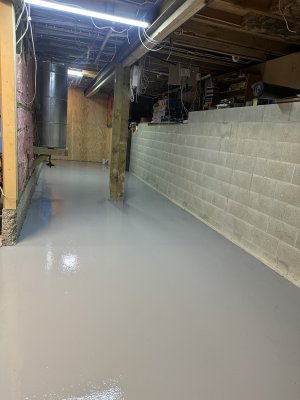
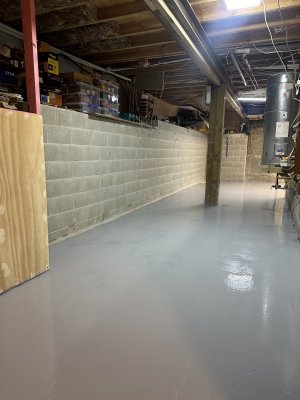
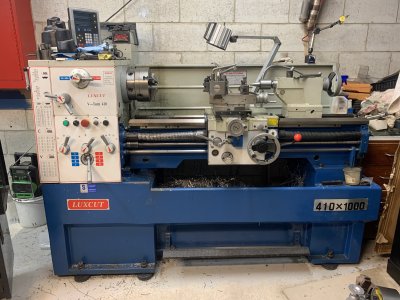
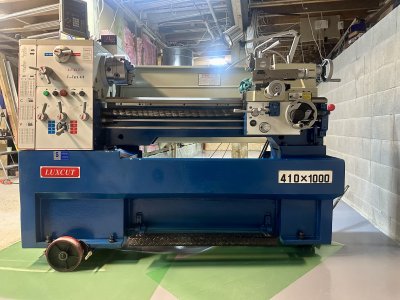
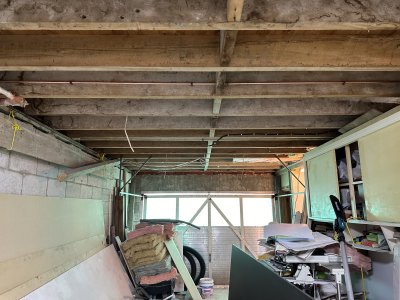
Basement workshop = possible long off topic thread

kiwishooter

Active member
Eric feel free to move this thread to a more suitable place if you want.

This has been a project that has been going on for a considerable time, work, life and other things have gotten in the way from time to time.

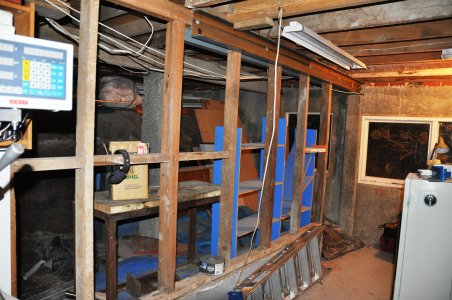
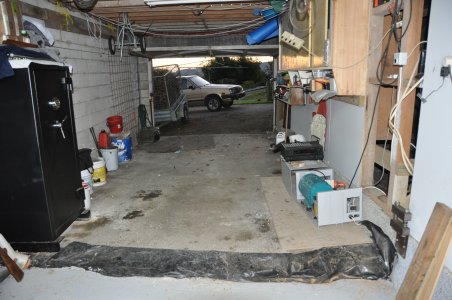
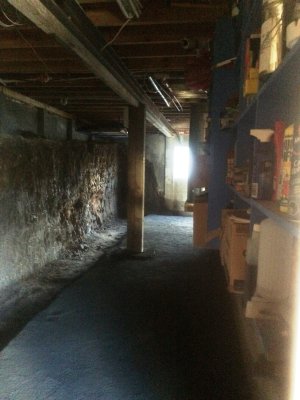
20+ years ago I bought a house that has a basement with a dirt floor and a section that had asphalt as a surface.
As it was the basement wasn't usable for much except parking a car in one section and storing stuff in as long as you put something between the dirt floor and what you wanted to store.
Yes, carboard boxes did tend to disintegrate if left on the dirt floor.
The area was really 2 single car lengths end to end on one side with a largish single car tilt a door at one end.
Shortly after moving in I dug out some dirt and levelled a section about half the length of the house toward the back of the double single garage section and had a 5" concrete floor poured. Due to the driveway for the house this wasn't an easy task, and the person that layed the concrete did a very poor job in my opinion.
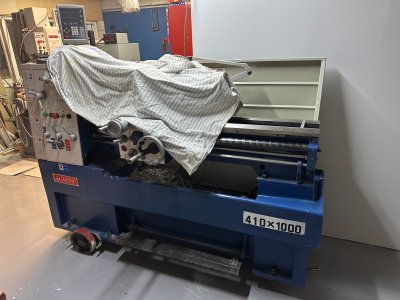
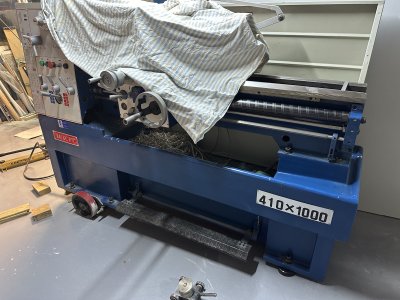
But it was a concrete floor and I built a bench, moved a lathe in (quite a story) moved a mill/drill in and a bit of other stuff, and was happy doing some projects and keeping my self occupied (when I found the time)

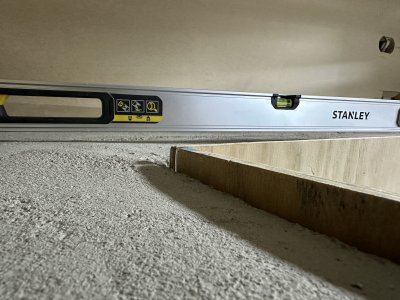
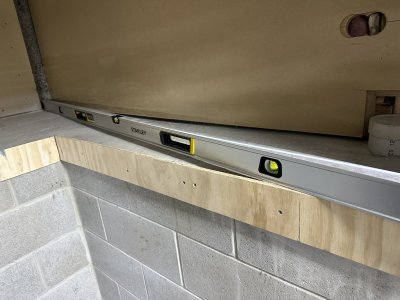
As time passed I found it wasn't level (something placed against the wall where the front edge was 400mm away from the wall needed 10mm+ spacers to get the item vertical) and dropped toward the front, another thing I found later was the top layer was "sandy" and would lift and peel just by rubbing your boot on it.

While living in the house I kept thinking about things to do to make things "better" and had sort of formed a bit of a plan, which got altered due to a water leak in the ceiling one weekend.
We went away for a weekend during winter and came back to a burst pipe in the ceiling, water running through the ceiling, down an internal wall and down into the basement. I don't know how it didn't get into the fuse box for the house in the basement as it was running down the studs where the fuse box is located.

The advent of the leak created an opportunity to start some forward thinking and get some plans drawn up for some house alterations and the development of a bigger usable space in the basement.
So some plans were drawn up and we got building consent and the plans included some structural work downstairs.

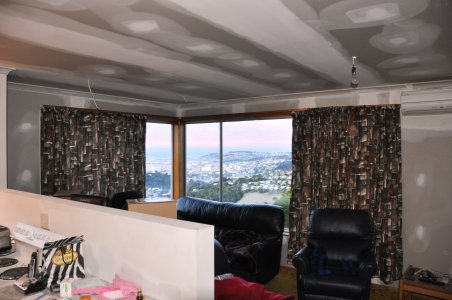
The house came first, we took out a load bearing wall, opened up the area between the kitchen, dining area and lounge, fitted a laminated beam into the ceiling to take the load of the load bearing wall. Removed all the wall linings and installed insulation, removed the ceiling and installed a new ceiling, added led lights additional power sockets etc.

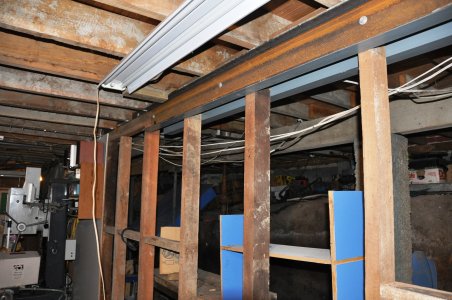
Downstairs there were 3 big concrete piles removed, some PFC bolted to both sided of an existing floor bearer that the floor joists rest on, part of a support was had pfc bolted to both sides of the top plate and the studs and footing were removed.
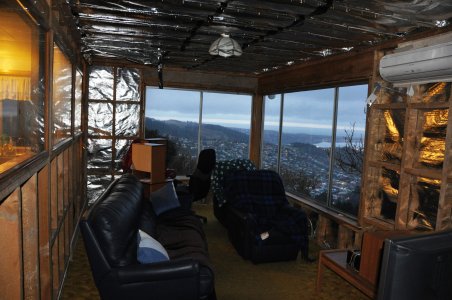
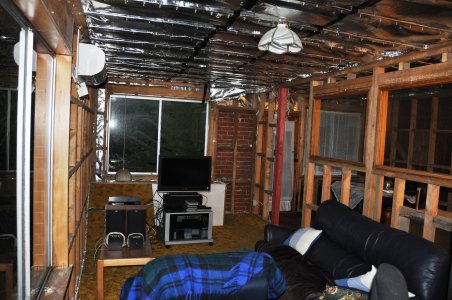
DSC_4633.JPG DSC_4634.JPG
Interior lining removed and getting ready to remove the wall on the left in the 1st photo, notice the wall removed had windows in it.
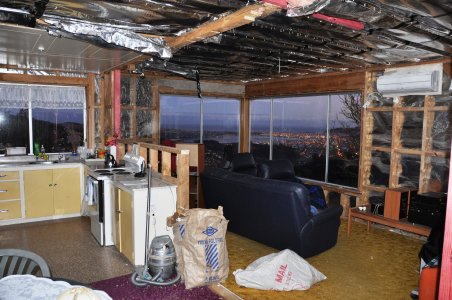
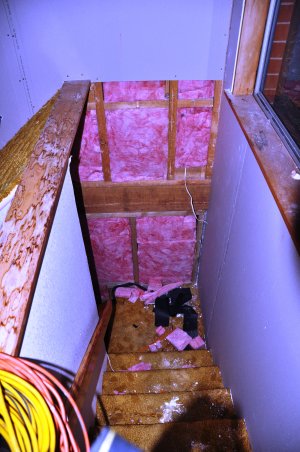


DSC_4646.JPG DSC_4666.JPG
Laminated beam has been installed and top portion of the wall removed, we lined down the stairs to the basement
DSC_4702.JPG DSC_4711.JPG
We have a new ceiling (it looks better after painting. The two pfc have been bolted to the top plate and the studs and footing are next to be removed
DSC_4712.JPG DSC_4713.JPG
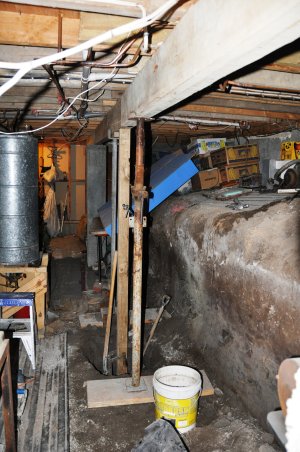
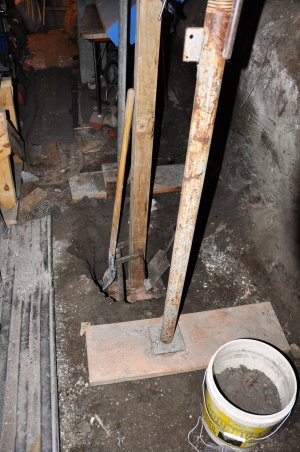
The support beam has been supported and the middle pile has been removed, a hole dug and a footing put in for the new pile. You can see one of the concrete piles that will be removed
 
Last edited:
Lots of work Kiwi! It's fun to follow along and see your progress. I need to make space for my Dad's lathe and believe it or not you have inspired me, thanks for sharing :)
Matt
 
Lots of work Kiwi! It's fun to follow along and see your progress. I need to make space for my Dad's lathe and believe it or not you have inspired me, thanks for sharing :)
Matt
Matt thanks for the comment it is appreciated.
Inspiration is fantastic the actual execution of that inspiration is something else.;)

I think about things a lot and inspiration or an idea from somewhere, then analyse how to end up with the results I hope to achieve.
Sometimes the execution doesn't achieve the desired result, that's a good learning experience.😞

While I have the "ideal outcome" in my head for the basement (and other projects), there is a lot of planning and research required to achieve the result I want on the available budget and in a particular order so I don't have to undo a lot of things I've already done just to redo them again.

The internet and forums are a great place to get inspiration and ideas to develop, but available products/components and availability of products/components here needs to be taken into account and invariably modifies or alters the project in some way.

During this thread I may take some diversions to show or explain how I achieved the outcomes I ended up with or why I did things the way I did.

The comments, questions, observations from others are what encourages people to post, and creates an interesting thread as a lot of information can be teased from people posting by the comments, questions and observations. For me the "difference" between other countries how things are done and the rules and regulations others face is quite enlightening.

This is a "Forum" and is set up for discussion, comments, questions etc and creating some "reference" material, if members don't "participate" in threads then this may as well be facebook where everything is "instantaneous" look at a pic, comment with a tick, laugh etc then move on and everything disappears within a few days.

Matt, take some photos to show what you do/did and how you achieved your outcomes and post a thread, these are the things people get inspiration from.
 
Well said Kiwi.
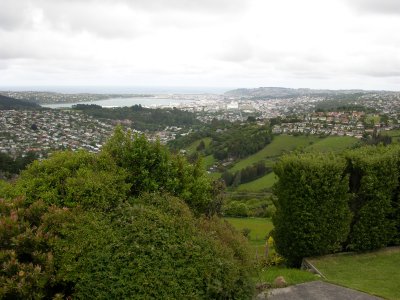
Btw that's one heck of a view.
Don't know if you said it or not.
How long has the basement project been going on?
Do you have a completion date or is it just when it's done it's done.
Seems like when it's your own personal project, it's really never done done.
 
Thanks, even 20+ years of looking at the view I still love it.
We did lose it briefly due to a neighbour from hell.

She has the personality of a twit and flourishes on strife.
She has a few acres and bought roosters and had them crowing waking the neighbours in the early hours of the morning, her property is also in the downward side of the hill we live on. Anyway a few years ago her gorse was getting close to the boundary and she wasn't keeping it the required distance from the boundary, so a neighbour complained to the council and they made her remove it to the required distance from the boundary.

In retaliation she planted fast growing Eucalyptus trees on the boundary which eventually interfered with our view and several other neighbours in the street, so we took her to court and won (sort of) the trees get trimmed annually to 1m below our floor level, and the trees grow about 1 m per year, but we have to pay for it.

The basement project has been on the "go" for a number of years due to a few wee problems, you know those curve balls things throw at you.
As I progress through the story I will enlighten people about some of the challenges we have encountered.

For the completion date, I have named that several times but a challenge has always cropped up to postpone that.
I'm no builder or joiner or contractor, I rebuild transmissions, so learning how to do things correctly has gained me some new skills (sort of).

So here are some pics of what we started with

DSC_4708.JPG
You can see the 2 pfc's that were bolted to the top plate of the floor joist support wall and through the wall framing you can see another concrete pile that was removed. Approx 4 studs were attached to the stud just this end of the pfc's and they support this end of the pfc's.
The remaining studs, the bottom plate and the concrete nib wall was removed to make a larger opening to access the other side.

DSC_8386.JPG DSC_8387.JPG
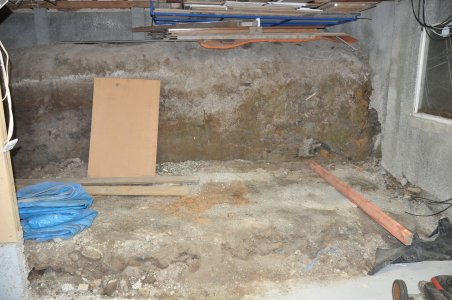
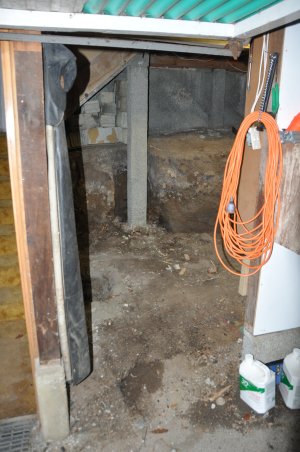
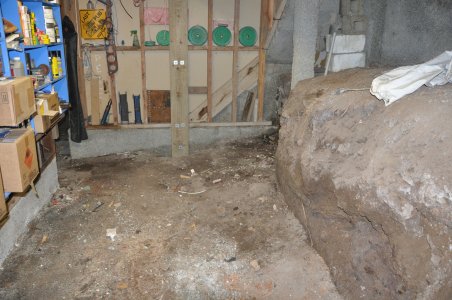
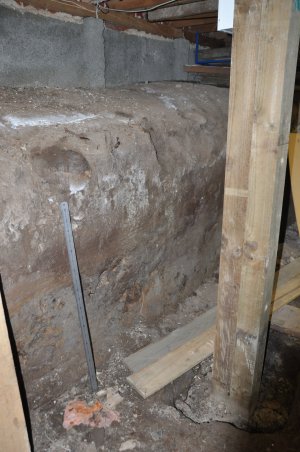
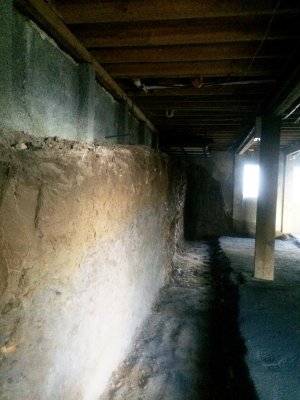
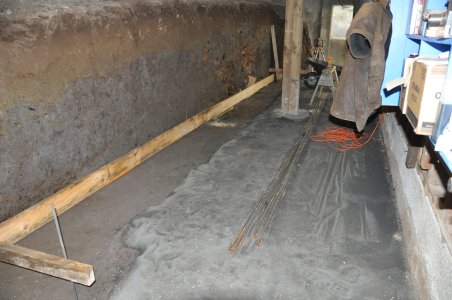
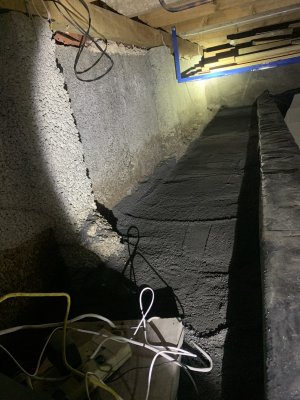
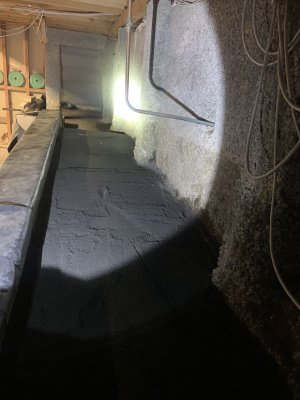
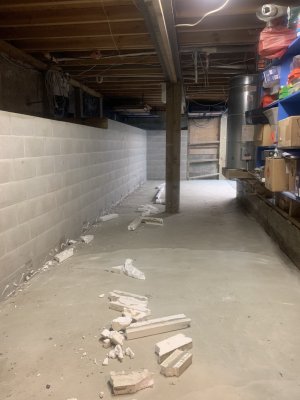
You can see the asphalt floor in the photo looking toward the door, no it isn't level it sloped down from the right to the left and toward the doorway. The grey bit of floor is the concrete floor I had poured shortly after moving in and yes the asphalt floor was considerably higher than the concrete. In the other photo taken after the studs, and nib wall had been removed it shows the other side of the basement, the floor was dirt and about 14+ inches higher than the existing concrete floor, and a big bank partway across that went all the way to the existing foundation wall.

DSC_8388.JPG DSC_8389.JPG
This is the opening at the other end of the support wall, it shows the dirt floor and the bank at that end.

DSC_8390.JPG DSC_8391.JPG
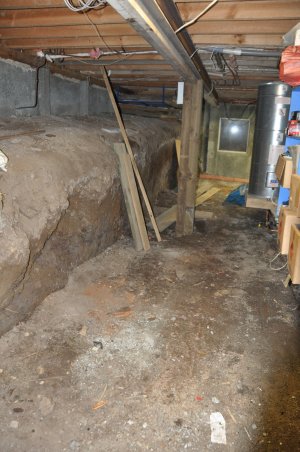
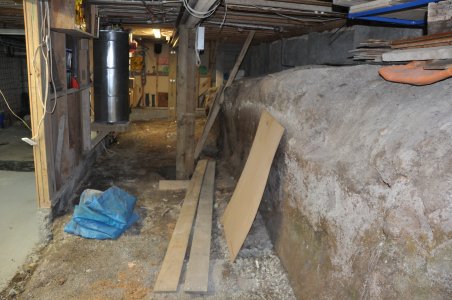
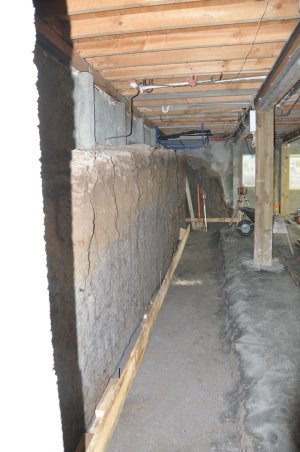
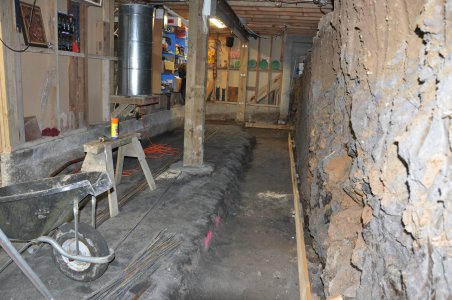
The above is a view showing the length of the side that needs dug out from each end

DSC_8394.JPG DSC_8398.JPG
DSC_8399.JPG
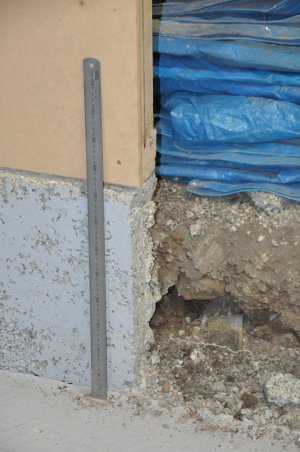
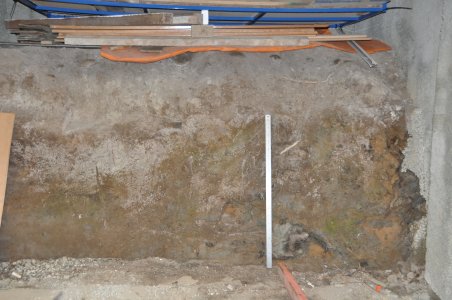
This gives you a scale of size. the nib wall is just over 400mm above the concrete floor and the ruler against the bank is a 1m ruler.
We had to empty out the basement area to enable access to get the dirt & rock dug out. It took quite a bit to get find someone to dig the basement out. Most looked at our driveway and either said they didn't want the job or the price was that high I could almost build a house.
We are on the bottom side of the hill from the street and our driveway comes down about 20m then takes a hard 90 deg right turn, down past the side of the house and then takes a slightly gentler 80deg left turn and finishes about 5 m past the end of the house. There have been a few stuck on our driveway especially rear wheel drive vehicles, they get to the top corner and the inner wheel spins. You can't turn a car and trailer around down at the bottom of the drive and you have to do a 3 point turn to turn a car around.
When I bought my lathe home on a trailer it was a bit tricky to get into the basement, I came down the drive while having another vehicle in the basement. I pulled round beside the bottom side of the house and luckily my neighbours were away and we don't have a fence between us. I backed the trailer back and jack knifed it (at this point the trailer was on the neighbors back lawn) then unhooked it from the tow vehicle and backed the vehicle in the basement back and hooked onto the trailer and pulled the trailer into the basement. Using the floor joists I lifted the lathe off the trailer, unhooked the trailer and pushed it out of the basement, yep the lathe was hanging off the floor joists in mid air, Lowered the lathe down onto pipes and pushed it over to the concrete wall, then backed the vehicle in the basement out.

The most expensive quote to dig out the basement was just over $100K, so near yet so far.
It took a while (over 3 years) to find someone to dig it out at a reasonable price.
 
Last edited:
Not sure how many are interested in this thread, since it's a bit off topic please let me know if it's not wanted and I will let it fade away

Since the driveway and access to the area to be dug out isn't exactly earth moving equipment friendly (a polite way of putting it) many places asked to look at the job of digging the 84T of dirt and rock out either declined to do it or gave a price far in excess of the actual cost so they could make a premium profit due to the difficulty.
Eventually we found someone prepared to do the job and gave a price we could live with, just north of 10k so the remaining heavy items were moved onto the existing concrete floor and the contractor started work.
Not made clear in the quote was the fact they were going to double handle the dirt, clay and rock that was dug out. Everything that was dug out was piled against the house, we learnt this as the digging progressed.
I didn't get any photos of the digging in progress but they used a skid steer digger that also had a jack hammer attachment.

IMG_1723.JPG IMG_1727.JPG

At the base of the bank a drain coil had to be installed for drainage, so it was boxed accordingly for the footing.
DSC_8410.JPG DSC_8411.JPG

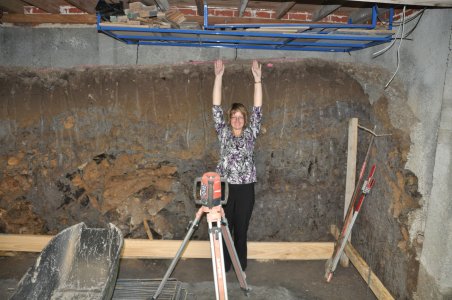
This was as far as we got for a while, it seems the engineer who drew up the plans didn't take into account a few things, the height of the bank after the dirt floor was lowered and also another issue made itself known, the rough finish on the bank due to the rock that got broken up and dug out. You will notice the rough texture of the bank just to the right in the below photo, also to give a bit of scale of size where the pink paint is on the edge of the footing the depth is approx 450mm (16") the footing was drawn up as 200mm (8") deep. My wife is almost 6' tall.
DSC_8412.JPG DSC_8418.JPG

The drain coil at the base of the bank had to exit the far side of the garage and exit under the concrete block wall to be joined up with the existing drain plumbing. Believe it or not the builder who installed the boxing for the footing dug that trench across the garage by hand instead of getting the digger to do it o_O
The builder made us aware of a problem. The bank was substantially higher than the plans showed!!! The plans called for a 600mm (2') wide footing and a retaining wall poured up against the bank with a water proofing blanket between the bank and poured in situ concrete wall.
I had contacted the company that was to supply and install the "water proofing blanket" the result was due to the uneven nature of the bank the water proofing blanket wouldn't seal any moisture from reaching the concrete wall....so now we had two serious problems and had to cease work.

IMG_1718.JPG

Since the original engineer had retired and was out of the country at this time we had a big problem finding an engineer just to do the alteration, they all wanted to recheck everything else involved with the project. I approached the original engineer when he returned and while it took some time he carried out the task of redrawing the plans and then we submitted for an alteration to the existing building consent, whew no problems. Yep those curve balls keep on cropping up
The solution to the problems was the width of the footing increased (you can notice that in the below photos), the rebar went from 12mm to 16mm and a concrete wall with vertical and horizontal rebar would be built. The concrete block wall would have a gap between the bank and the back of the block wall and this would be filled with free draining gravel.
While we were waiting on the solution we also had a lot more water ingress than we had previously experienced

IMG_0006.JPG IMG_0007.JPG

Getting closer to moving forward
 
Last edited:
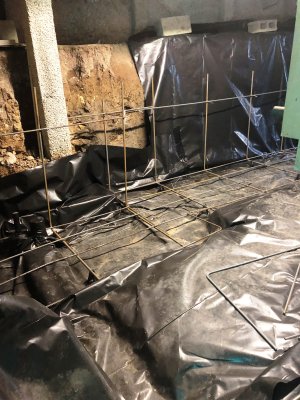
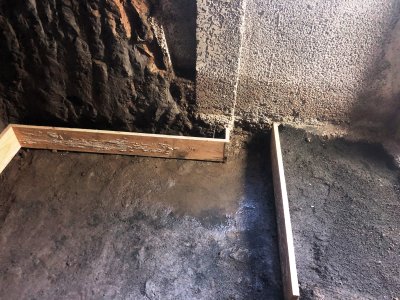
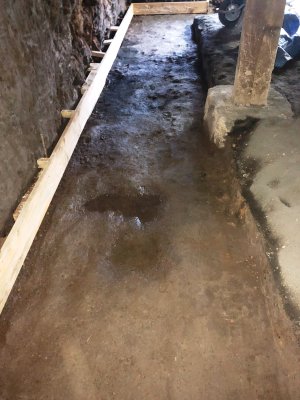
The plans called for .25mil Polythene under the footing and slab with 50mm of crusher dust between the soil and the concrete floor.
So I laid and taped the polythene as required, It didn't require any polythene behind the concrete block retaining wall, but I laid polythene up the bank and over the top of the bank before the concrete block wall was built.

IMG_0803.JPG IMG_0805.JPG

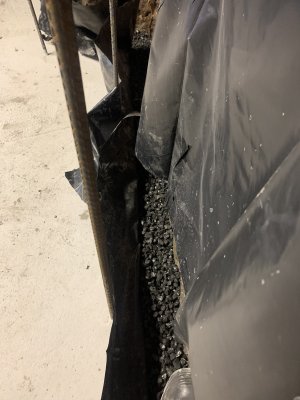
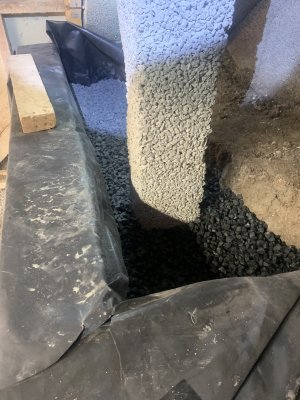
Once the footing was poured the drain coil in textile sock was installed and connected to the drain, then free draining gravel was installed around it
IMG_4146.JPG IMG_4147.JPG

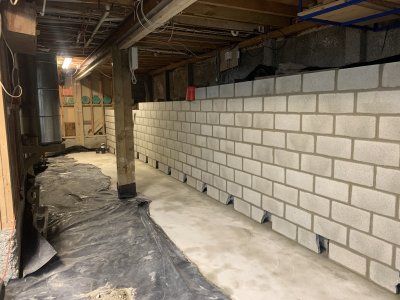
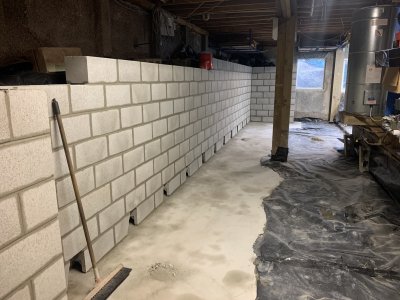
Then a concrete wall built, note the knock outs at the base so the rebar can be inspected before the wall is filled.
IMG_4155.JPG IMG_4157.JPG

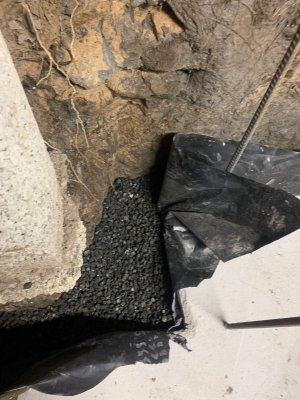
Once the blocks were filled it was time to fold the polythene over the front of the wall and fill up behind the wall with free draining gravel
IMG_4203.jpg IMG_4218.jpg

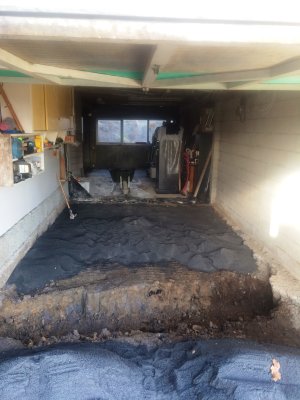
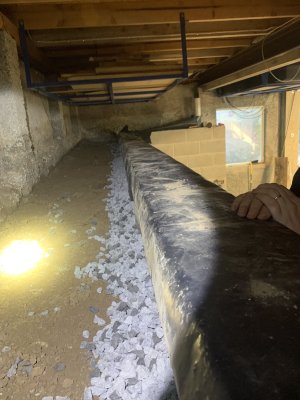
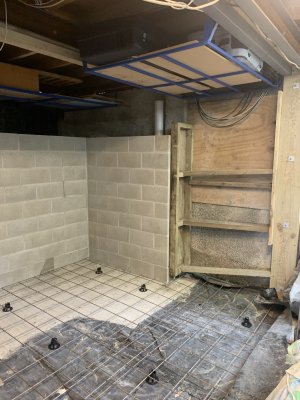
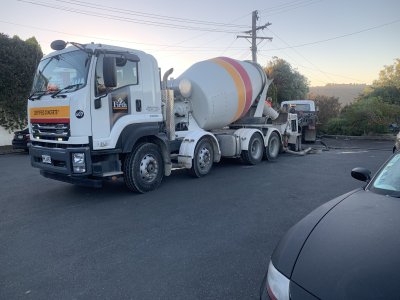
Once filled to level with the top of the bank with free draining gravel, which was 200mm (8") below the block wall height, I put in 75mm of crusher dust folded the polythene over the top and up the foundation wall and it's ready for concrete on the top
IMG_4252.jpg IMG_4254.jpg
 
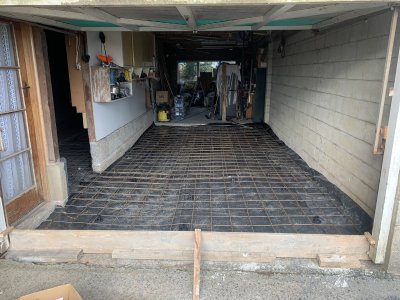
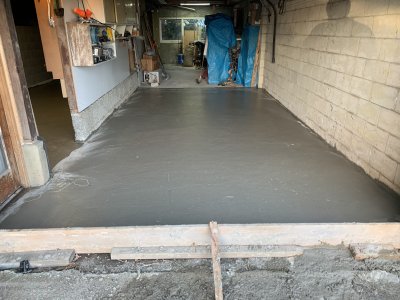
With that done it was time to lay the reinforcing for the floor, remove a window install reinforcing and box it for filling with concrete

IMG_4321.jpg IMG_4324.jpg

Getting closer to a concrete floor.

On thing I forgot to add above was once the contractor had dug the 84T of material out from under the house and piled it on the outside of the concrete block wall I told him to leave it there, he had already given us an invoice at the end of the month for the digging out. It was less than 50% of the quoted price. I had thought of a very good use for the material dug out.
 
Last edited:
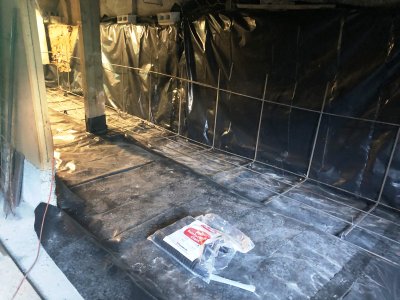
With that done it was time to lay the reinforcing for the floor, remove a window install reinforcing and box it for filling with concrete

View attachment 669 View attachment 671

Getting closer to a concrete floor.

On thing I forgot to add above was once the contractor had dug the 84T of material out from under the house and piled it on the outside of the concrete block wall I told him to leave it there, he had already given us an invoice at the end of the month for the digging out. It was less than 50% of the quoted price. I had thought of a very good use for the material dug out.
Not been commenting Ian but got the thread on ‘Watch’. Keep it going please.
 
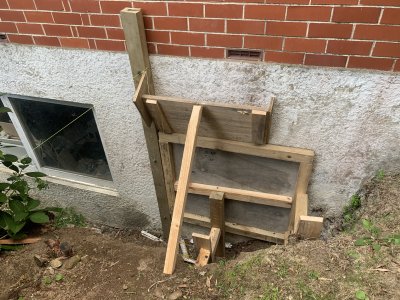
You will notice in the previous pics the window on the end wall has been removed and the opening boxed on the inside.
We had a plan.

IMG_4318.jpg IMG_4319.jpg
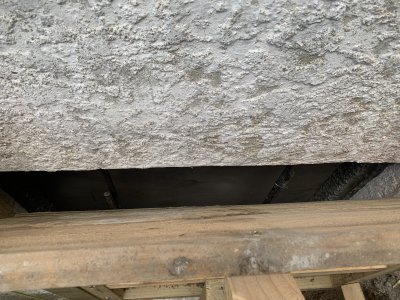
The outside was also boxed in and a chute added to let the concrete in, note the 16mm rebar in the opening where the window was removed
Holes were drilled top and bottom and rebar chemset into the holes and tied together.

IMG_4388.jpg
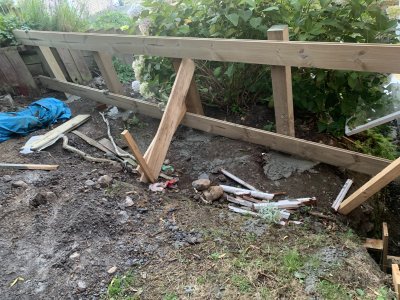
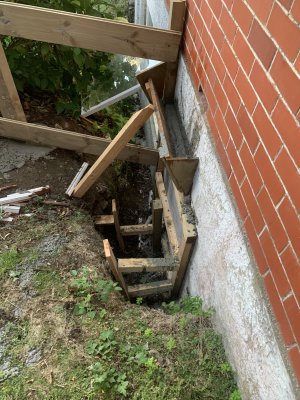
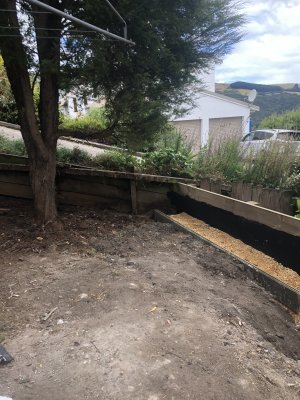
The plan involved building a retaining wall from the end of the house to the boundary

IMG_4386.jpg
The window is now a wall, I was quite surprised how thick the foundation wall was, just over 250mm.
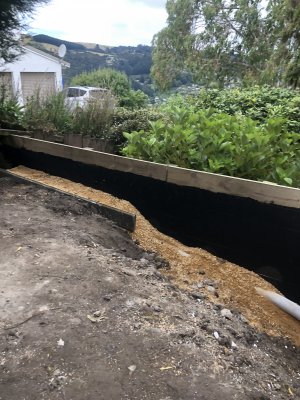
After waiting a couple of weeks for the concrete to set I painted the white foundation wall and the tongue and groove retaining wall with mole seal, 4 coats in total.

IMG_3286.JPG IMG_3276.JPG
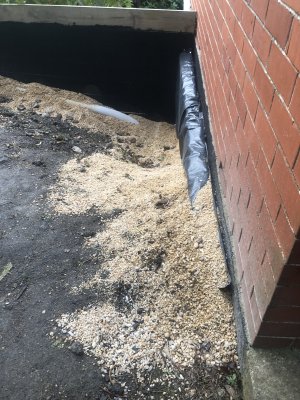
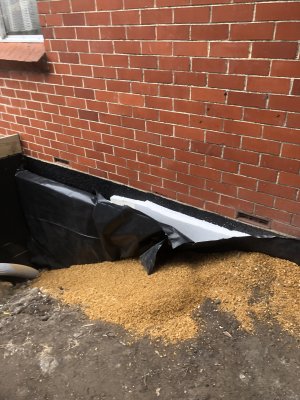
I put a 150mm drain coil in textile sock behind the retaining wall and ran it toward the house and along the foundation below the windows.
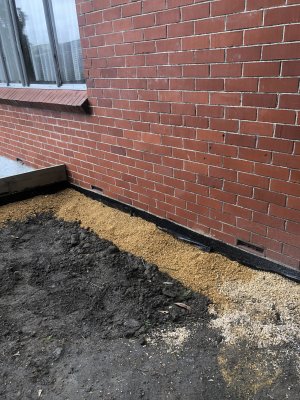
100mm polystyrene was set up against the foundation wall of the house and .25mil polythene was sandwiched between the polystyrene and the free draining gravel and folded over the top of the polystyrene to act as a bit of a water barrier.

IMG_3274.JPG IMG_3288.JPG
Using free draining gravel and some of the dirt dug out from the basement we levelled out an uneven slope and ended up with a flat useable area.
I need to take a photo of the area with it filled and levelled.

IMG_3277.JPG
Our house was built in the mid 60's and the neighbours house after that. The original neighbour filled between his driveway and my fence with the result the fence has bulged significantly. Another thing that needs addressed sometime.
 
Last edited:
Back
Top