Here are some articles that are Still Up on Saubier

Little Stinger


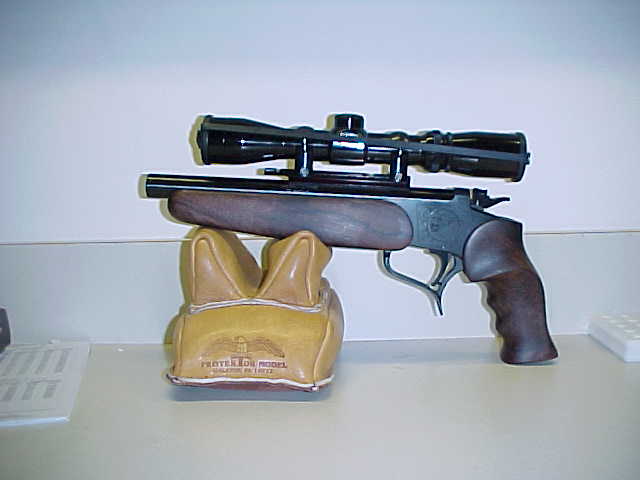
I recently purchased a .17 Ackley Hornet barrel for the contender on a whim. It is a 10" barrel, and is the only 10" barrel that I own. I thought that it would make a nice little gun for shooting gray squirrels in the winter. I also had heard so many good things about the cartridge, that I thought I should try one. I bought the barrel from Bullberry when I saw it listed on the internet specials page.


Image87.jpg


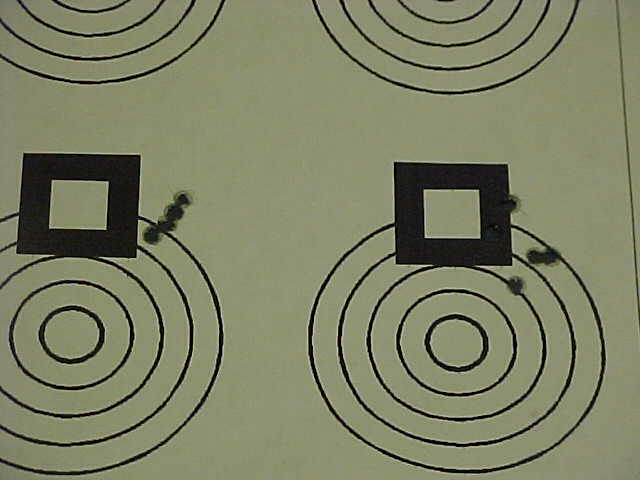
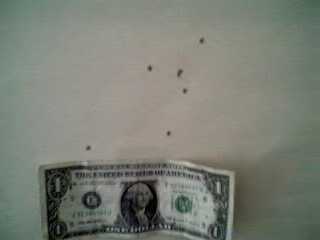
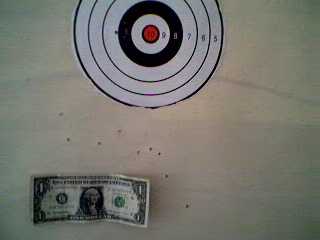
My excitement was peaked by this little package on our first date at the range. I had loaded up some 50 formed cases for fireforming. I bought the cases already formed from John Delozier and only had to anneal them prior to loading. I had some IMR 4227 and some 20 grain Starkes that I chose to use. I looked in my Sensational Seventeens and came up with some appropriate loads for fireforming. I used 11.0 grains of 4227 under the 20 grain Starke bullets using the winchester cases and CCI400 primers. I was amazed at both the accuracy and the velocity achieved with such a stubby barrel. Please keep in mind that this is my squirrel gun and that the intended range is 50 yards or less. I was sighting in at the range at a guesstimated 50 yards which turned out to be 60 yards after measured.


Image88.jpg


I look forward to the load development for this gun and a successful squirrel season in the fall. I will be submitting a full article late this year for publication in Small Caliber News.
 
Sweet .17 it may very well be contagious!


There were some key events that lead up to the eventual purchase of my first .17, and I have to give credit to John Henry for his contribution to the world wide web on his Coyote Gods website. I read what he and others on the various chat boards had to say about the .17 and was compelled to own one. The thought of shooting a little tiny bullet at extreme velocities intrigued me. The fact that this fictional-like character John Henry used his .17s to dispatch coyotes out at 300+ yards lured me with an intensity that can only compare to Rosie ODonnell after a candy bar. With confidence in John Henrys infinite wisdom I could disregard the myths of barrel fouling, and wind drift.


I remember my first .17 like it was yesterday. I was in the gun shop and saw it up in the rack amongst some Remington Senderos and Mountain Rifles. It was a Remington Model 700 Classic in .17 Remington. I had read about these guns on the Go Go Varmint Go website, and the success that others were reporting intrigued me enough to make me buy one. I had never seen a .17 caliber bullet, but the gunshop showed me some of the factory loads. That little tiny bullet perched on top of that big case was a sight to behold I had to have it. I had him throw in a trigger job and came to an agreement on price. I also needed to buy a special cleaning rod, bore guide, jag, patches. The owner of the store advised me that I may need some Sweets and JB Bore compound. I bought a couple of boxes of Remington factory loads to get started, figuring they would also provide some brass for later reloading.


I didnt have any money for a scope, so I scrounged a Leupold 3-9 power scope from my .270. For the base and rings, a local Jumbo Sports was going out of business and they had a black one-piece base and some silver rings(all Leupold). So what if I had a black base, silver rings, and a black scope with a gold ring I was ready to shoot. I went to the range to shoot the gun and had no rest or anything just a wooden block with a rag on top to keep from scratching up my shiny new stock. I had printed out some targets from Varmint Als website and was ready to go.


I began shooting some groups and was astonished by the total absence of recoil. I could keep my eyes on the target and actually not lose sight of it. This was the first time that I had ever fired a centerfire rifle with this little recoil. The groups I shot were not remarkable, but I was pleased none the less. At the time, I felt like I was doing so well with the factory ammo, I began to think about reloads.


Funny how it worked out, but I got a bonus paycheck right before a big gun show in Valley Forge, PA, and I knew right away it was a sign that I should get my reloading stuff there. I bought a Rockchucker press, RCBS scale, hand priming tool, .17 cal funnel, Lymans 47th loading manual, and RCBS .17 Remington dies. I didnt find any brass for the .17, and most looked at me like I had two heads when I asked for .17 Remington brass. I spent most of the show walking around looking for my reloading goodies, and I burned up my allocated cash rather quickly. Then, it happened like destiny, I stumbled across the booth of Tom Thomas, owner of The Outdoorsman, with all of his Coopers. In my eyes, these were the Holy Grail of .17s I had the opportunity to hold a Cooper Varmint Extreme in .17 Mach IV. I still aspire to own one of these fine rifles (someday I will own a Cooper, I will own a Cooper, I will own a Cooper). I had been emotionally scarred and Tom Thomas was to blame. By then, the only thing I could afford was a back copy of Small Caliber News and a free Cooper brochure. I didnt realize it at the time, but my addiction was beyond control. I left that show with a backpack full of reloading goodies and high hopes.


When I got home, my excitement grew stronger, and so did my addiction. There were still several things that I needed before I could start reloading, so I decided to give Todd Kindler a call at the Woodchuck Den. Todd gave me the advice I needed, and I ordered a copy of the Sensational Seventeens manual as well as some .17 Remington brass and a Wilson Case trimmer with a .17 Remington case holder. Todd Kindler is "The Go-to Guy" for the .17s, and I felt like I knew him. He never seemed to get tired of all my calls and questions.


I had to set up a work area to support my growing addiction. I picked up an old bench that was being thrown away at work and mounted my Press to it. This little bench was only 3 feet deep by 4 feet wide and I have to say that it was a sorry sight. I had it placed in my basement up against a concrete block wall with no light. I had to string an extension cord across the basement and plug in a halogen shop light that was clipped to the floor joist above the bench. I had all of my reloading stuff stashed in a plastic tote with a lid. My little reloading area was not so pretty but I spent hours there learning the craft. I remember my first night reloading at that little bench until 2:00 in the morning.


To start reloading for my .17 Remington, I chose IMR 4320 powder, Hornady 25 grain HPs, and the Remington 7 primers. I tried this combination and had moderate success doing so, but as I was learning to reload I was also learning to shoot (Im still learning at both). I read in my Sensational Seventeens manual about Winchester 760 powder and saw the pictures of the fine groups from the load, so I decided to give it a try. My groups with the 760 were as good or better than those I got with the IMR4320, but people warned me about the temperature sensitivity of 760. Being a new reloader, I decided I had better go with something more conservative and purchased some Varget. The Varget didnt meet my expectations, and I switched back to the 4320. Later I learned that I could very well have continued to use the 760, even for shooting on hot summer days. At that point, I purchased some other bullets to try including some 25 grain Berger MEFs and some 25 grain Starkes. The Starkes, when combined with 24.2 grains of IMR4320 is still my favorite load.


I had heard and read a lot about copper fouling in the .17 Remington. I would be lying if I told you that this gun doesnt copper foul. The accuracy does decline some as well when the barrel gets fouled badly, but it still shoots close to an inch. With a clean barrel in light wind conditions, the gun is capable of shooting " groups with its favorite load. I can shoot a string of 25 40 rounds before I notice the difference in the accuracy. Copper fouling shouldnt discourage you from getting a .17, in fact, it hasnt discouraged me even a little as you will see. What I found is that if you get a factory barreled Remington, you will need to break in the barrel carefully and possibly have it lapped. I have considered fire lapping my barrel, but will probably shoot it the way it is until I can justify a re-barrel. I want to see what happens as the barrel gets more massaging from 4000-fps projectiles.
 
Sweet 17 Part 2
I decided that I would love to have a premium barrel custom gun in a .17 caliber wildcat. I already had a T/C Encore handgun and decided that I would like to have a carbine barrel for this frame. It all happened as a matter of circumstance, and the whole story of that gun is listed on this page as "Its a Hebee?". One thing that I will say here is that Fred Smith of Bullberry Barrel Works played a large part in contributing to my addiction by providing such wonderful barrels at prices that even a father of 3 small children could afford. I gained more confidence and experience with that gun in both shooting and reloading. I found that I could get a custom barrel made for only a little investment. The word little should be considered relative to the cost of a custom gun. I have also found that the barrel is only the beginning, and the cost of brass, dies, and time is much larger. The custom barrels that I have gotten thus far are much better about the copper fouling. I have to say that with the several Bullberry barrels that I have gotten thus far, fouling is almost non-existent.


The addiction has now taken a firm grip on me, and I will continue to provide information on my projects as they grow. I now have a nice reloading bench with oak cabinets and a Formica counter top. My reloading equipment continues to acumulate, including my most recent acquisition of a Harrells Benchrest Powder measure. Thanks to Todd Kindler for talking me into this fine tool. I also have two chronographs that my father gave me for Christmas.


Keep an eye out from time to time on the site to see how my projects are coming and feel free to tell me about yours.


The .17 caliber projects that I am currently working on include:


.17 Ackley Hornet 10" Contender barrel.


.17 Mach IV 20" Encore barrel.


.17 Jet 21" Contender barrel.

Other projects I am working on that can still be considered small caliber:


.223 Remington 15" Contender barrel.


6BR 26" Encore barrel.

I am doing articles for Small Caliber News on several of the projects listed above, so I wont put them on the site until after they are published. Please see the Long Range Handgun contribution for now and look for that article in an issue of SCN shortly. I hope to have it done for the Summer edition since I missed the deadline for the Spring edition.
 
17calibers.jpg


Which .17?


by Jim Saubier


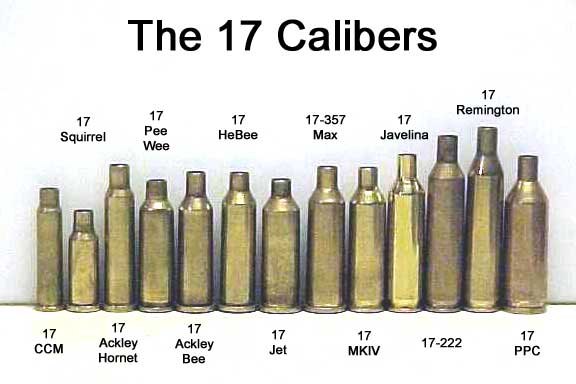
One of the most popular .17 caliber questions is "Which .17 do I need?". What I have tried to do here is provide some guidance when making that decision. I have hands on experience with many of these, and have sought information from others when covering the cartridges that I am less familiar with. I currently load for 5 of these .17s and dont intend to own all of them as they dont all appeal to me. There are several load manuals available that provide information on the .17s and I will cover them in the section called - .17 caliber publications. I am not attempting to provide load data here.


.17 CCM


This is the Cooper Centerfire Magnum (CCM) and is the smallest of the reloadable .17s that I am aware of. I have heard of some rimfire .17s, but dont know anything about them. This is a very small case that is based on the .22 CCM case that was intended to be a certerfire case that is reloadable and comparable to the .22WMR. This case was developed by Dan Cooper of Cooper firearms. It should be intended to shoot the lighter .17 bullets with small amounts of powder and create very little noise. Fouling would probably be very limited as well. It should push the 15 grain bullets to close to 3500 fps. This cartridge is covered pretty well in the "Sensational Seventeens" manual that is written by Todd Kindler.


.17 Squirrel


Another cartridge that I dont have any experience with. Load data for this round is provided in Dick Saunders load manual. As the name implies, this is a cartridge that is intended to be used on squirrels and such critters as a reloadable cartridge that will out perform any rimfire. It should be a dandy cartridge indeed for turkeys as well.


.17 Ackley Hornet


I just got a contender barrel chambered for this cartridge and really enjoy shooting it. I hope to write an article on this little gun in the fall/winter timeframe. This is a classic .17 and for good reason. The brass is cheap, the recoil is nil, the powder used is minimal, and the performance is stellar. I have read many articles on this round, and am impressed that it can be used for so much. Vic (one of the Coyote Gods see links page) uses has used his .17 hornet on coyotes. I have heard of others using this round for coyotes as well and most report the same thing. If the range is reasonable and the shot placement correct, they go down like struck by lightning. Load data is available for this case in both .17 load manuals that I have(Kindlers and Saunders). The .17 Ackley hornet should be intended for prairie dogs, squirrels, foxes, woodchucks, and other small critters out to 200 yards.


.17 Ackley Bee


Based on the fine .218 Bee case. The Ackley Bee is a fine cartridge and shows some advantage over the Hornet. Case forming is easy, dies readily available, and load data is available in Dick Saunders manual. My good friend John Delozier is working with an Ackley Bee and he is very pleased with the performance thus far. With the performance being better than the hornet the only advantage that the hornet has is the price of the brass. Bee brass is almost twice the cost of the very economical hornet brass. Availability is not an issue for Bee brass at this time. The Bee brass is thicker and stronger than the hornet brass, and should be able to be reloaded more times. This cartridge is only slightly better than the .17 Ackley Hornet in the velocity department. Thank you Mr. Ackley for another .17.


.17 Hebee


This is nothing more than a .17 Ackley Bee improved. Dennis Hrusosky took notice of the longer neck on the Ackley Bee and must have figured that it would be better with more power RRRRRR. Either way, the only difference is the location of the shoulder. The Hebee gains case capacity and that translates to greater potential velocities. Making cases is not difficult, but annealing is a requirement. This round will come very close to the performance of the .17 Mach IV with the 20 grain bullets, but the Mach IV will handle the 25 grain bullets slightly better. I hope to do a side by side comparison of these two in the near future and will report the results then. Out of a 20 inch barrel, I am able to push a 20 grain V-max or Starke to 3900 fps. That is pretty impressive for such a small cartridge. Loading data for this cartridge is available in Todd Kindlers Sensational Seventeens and also in my article posted on this site.


.17 Mach IV


This is the most popular of the .17 caliber wildcats and for good reason. It is easy to form the cases, load data is readily available, and it is a very efficient performer. This round is based on the .221 Remington Fireball case, and is simply necked down to .17 and loaded. The case looks perfect once it is necked down and hardly changes at all after firing for the first time. The Mach IV as its name implies should be able to push a 25 grain bullet at 4,000 fps. I am not sure that it can safely do this with a barrel shorter than 26", but have heard reports of some doing it. The one that I am beginning to test only has a 20" barrel, and I hope to compare apples to apples with the Hebee and Mach IV soon. The Mach IV can do just about anything that the .17 remington can do with the 25 grain bullets, but the .17 Remington gets the nod when using the heavier 27 - 30 grain bullets.


.17 Javelina


The .17 Javelina is based on the .222 case and has a case capacity between the Mach IV and the .17 Remington. The Javelina has never gained the popularity of the Mach IV or most of the other .17s due to the case forming expense and difficulty. The forming dies for this caliber are expensive. The Javelina case is formed by pushing the shoulder back about 0.150". This is normally done with a forming die set, made by RCBS, Redding, etc. It could also be roughly done with a 221FB full-length die, set higher in the press


than normal. Necking down to 17cal. is then done with subsequent dies. There is significant case trimming that must take place following the forming. I hope to own a Javelina some day and look forward to the challenge of case forming (not the expensive dies though). Kevin Gullette (technical staffer for SCN) is a big fan of this cartridge and has provided the case forming information for the Javelina.


.17-.222


This is similar to the Javelina, but with a little more case capacity. It is also very similar to the .17 Remington. It will have a slightly longer neck than the .17 Remington and should be easily formed from .222 brass by simply necking down the case. The shoulder should remain in its original location. This cartridge has seen limited popularity probably since it is so close to the .17 Remington. With the fine .222 brass out there, this cartridge does not get the attention that it should.
 
Which 17 Part 2
.17 Jet


This caliber was created by Dick Saunders, and a joy it is to shoot. The case forming can be considered tedious, but the effort is rewarded with a fine round. This cartridge is based on the .22 Remington Jet case, with an almost straight taper and 32 degrees shoulder. The case capacity of this round is similar to the Mach IV, but the performance is closer to the .17 Remington or possibly even greater. These cases are thick and strong. Load data on this cartridge is listed in Dick Saunders load manual and nowhere else that I am aware of. Just about any of the powders that are listed for the Mach IV should be good performers. Case availability seems to haunt this little cartridge, but when it is available it is usually very cheap. I have bought 700 Jet cases recently for 13.70 per 100. These cases should last a very long time as well. I only intend to form 300 and want to sit on the rest for other potential projects. I will be doing an article on this gun and have been working with Dick Saunders for this effort.


.17 Remington


The only commercially loaded .17 caliber available. Remington has offered the Model 700 for this caliber for quite a while, and even made it the 1999 Model 700 Classic one of which I have in my safe. This is the workhorse of the .17s, and has gained moderate popularity amongst the fur hunters. With 25 grain bullets, a velocity of 4,000 fps can be safely achieved, and 4300 fps with the 20 grain bullets is certainly attainable as well. Favorite powders for this caliber are IMR4320, Winchester 760, Varget, and Vihtavouri n135. I personally have found favor with IMR 4320 and have used all listed powders with exception of n135. Where the .17 Remington really shines is with the 30 grain bullets. A 1-9 twist is recommended when using the 30 grain bullets, but the .17 Remington can whirl them out there at a pretty good clip.


.17 PPC & .17 BR


Any information on these would be appreciated as I have little. The parent cases are obvious, and I am sure that they are just necked down to .17 but I have little comparison velocity wise of what they are capable.
 
Ground Hog Hunt 8/5/01


Earlier this year a friend of mine was telling me how bad the ground hogs are in his pasture on his farm. He went on to tell me how they are in the barns and all around the old equipment, etc. I got a chance to go out there about a month ago to take a little walk. I saw one hog but was unable to get a shot before he made it back to his hole. The grass was a little high and it was difficult to see the hog and so I figured that I had better wait until they cut the field again. Although I didnt get to shoot any hogs, in the 1 hour that I was there I saw 3 deer, 1 woodchuck, and 1 fox. The fox was within 30 yards. 2 of the 3 deer were very nice bucks. A successful trip in my eyes and I would be back when the field was cut.


Well last week, Thursday actually, I stopped by the farm on my way home to see if the field had been cut. They were in the process of bailing it and had most of it already in the wagons. I stopped to talk to the farmer, who Ive known since grade school, and he said that there were a few holes in his field. I had to get home but told him that I would be back soon to help him out with his problem.


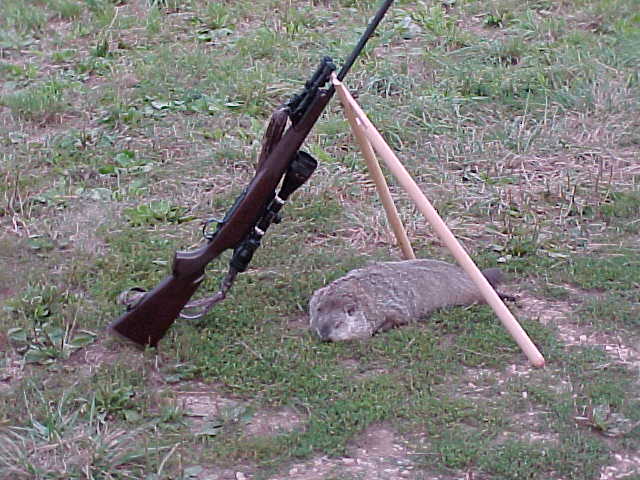
Not sure how much help I was in reducing the population but I did have my opportunities. The first one I saw was about 110 yards on the far end of the field. I was carrying my Remington Model 700 Classic in .17 Remington. I had a small bipod on the gun but was also carrying my version of Varmint Als bi-fur-pod (shooting sticks). This was a pretty big chuck and was feeding contently in the taller grass. While he was feeding in the grass, I could only see his top half and was aiming at his shoulder. When I shot, he ran to the edge of the woods and stopped. I couldnt figure out what had happened but I definitely missed him. I had enough time to get off a second shot but was not sure why I missed. I didnt shoot at him again and he was able to reach safety in the dense undergrowth of the treeline. I sat there trying to figure out why I had missed him and realized that I had the gun sighted in at 1" high for 100 yards. I must have shot high since I did not see the impact in front of the hog. Being able to spot your hits with the .17 is definitely a bonus.


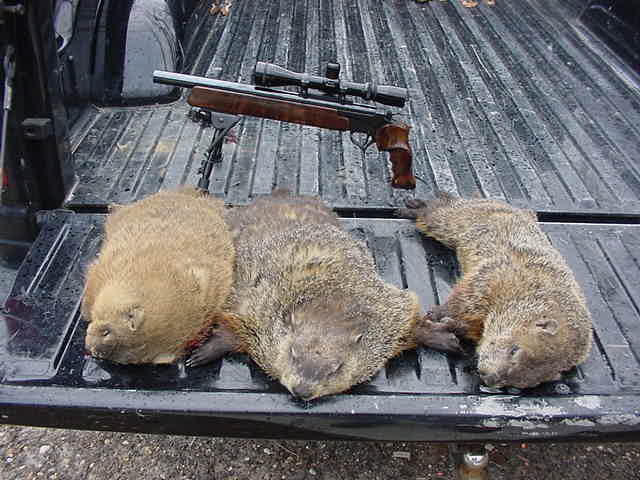
A little disappointed at myself, I headed further down the field. I spotted a big gray hog at the far end of the field. He was about 150 yards away and I got set up with my bi-fur-pod and the gun resting in the sticks. This hog was out grazing and was a good size chuck. I put the cross-hairs on the shoulder and then aimed lower realizing that the point of impact would be high. I squeezed off the shot when I felt solid and watched the action through the scope as the little 25 grain Starke Hollow point rolled this large chuck clean over onto its back. Not even a twitch of the tail could be seen. Below is a picture of my .17 Remington in my bi-fur-pod over the chuck.


Image116.jpg


When I walked up to the hog, I rolled it over to see if there was an exit wound. To my surprise and disappointment, there was a large exit wound just behind the front shoulder on the opposite side.


Description of the gun and load.


  • Remington Model 700 Classic (1999)
  • Caliber: .17 Remington
  • Load: 24.2 grains of IMR 4320 behind a 25 grain Starke RPVB. Remington 7 primers.
  • Scope: Simmons 44 Mag. 4-12 power.

Scope base and rings Leupold. Yes I know that the rings are silver and that the base is blued. I bought them from a store going out of business and got them cheap. Cheap was definitely necessary at the time.
 
.17 Ackley Bee
I bought my first .172" caliber rifle in June of 1999. It was a Remington Classic Model 700 chambered for the only factory .172" caliber available, the .17 Remington. Ever since that time, I have been a true small bore fanatic! As any true varminter does, as soon as (or even before in my case) having one project finished another one is already in the works. As this is being written, Im having a .17 Ackley Hornet built on a Martini Cadet action. But while waiting on this one I needed something else to do. Also being a fan of the T/C Encore line up I figured this would be a good platform to base my next small caliber from.
The plan was for a short fat barrel that could be used in either a rifle or handgun formation. This required a barrel at least 16 inches in length. Having settled in on 16.25" as the finished length I now needed to decide on a caliber. Only knowing that it would be a .172" caliber and already having a .17 Mach IV and .17 Remington in the gun safe, as well as a .17 Ackley Hornet being built, really narrowed the choices. For some help I rang the phone of longtime barrel and stock maker Fred Smith at Bullberry Barrels Works (www.bullberry.com). Specializing in T/C Contender and Encore barrels I figured he would be the one to help me out. Being a single shot action, the possibilities were endless. After a brief talk with Fred, I settled on the .17 Ackley Bee and placed my order. While waiting on the barrel I called Midsouth Shooter Supply (www.midsouthshooterssupply.com) rounded up a set of Leupold Quick Release Rings and Base that held the Burris 3-12X32 EER scope in place.
While cruising the web searching for information on the .17 Ackley Bee I came across an extra attractive package that was for sale. The package was a Ruger 77/22, complete with rings and scope that had been rebarreled with a Douglas tube reamed to .17 Ackley Bee! Not only that, but it came with all the necessary reloading dies. What a deal! Instead of having to go ahead and order all the proper dies, I simply bought the rifle along with the dies and had everything ready to go! Now only if all projects would be this simple.
The .17 Ackley Bee is a necked down an improved version of the parent case, the .218 Bee. It is also one of the lesser-known .172" caliber rounds because of the parent cartridge it is formed from. Though the .218 Bee parent brass for the .17 Ackley Bee can be a little tough to come by, it does have its advantages. Famous wildcatter P.O. Ackley developed it back in the 1950's, and he considered it the ideal small case for the .172" caliber cartridge. Mr. Ackley thought there is relatively little gain in ballistic performance by using cartridge cases larger than the .17 Ackley Bee and cases of very much larger capacity often produce erratic results and poor accuracy.
Unlike a similar .172" caliber wildcat, the .17 Mach IV (simply a necked down .221 Fireball), the .17 Ackley Bee takes on a whole new look after forming that does not in the least resemble the parent cartridge. The sloped shoulders that are the trademark of the Bee do not exist when forming is complete. This is where is gets those cool looking straight case walls and sharp shoulder.
The 17 Ackley Bee, like the .17 Ackley Hornet, is chambered mostly in single shot rifles. Bolt actions are sometimes used but will not always handle the rimmed case well when feeding from the magazine. The Ruger 77/22 I picked up was originally chambered for the smaller rimmed .22 Hornet repeater but converted to a single shot when rebarreled.
Being a rimmed cartridge made the .17 Ackley Bee extra attractive for the Encore project. Unlike rimless rounds such as the .17 Mach IV or .17 Remington, the rimmed kind can be extracted from the Encores single shot chamber by flipping the action open and pointing the muzzle skyward. Unless the loads are hot, the case will fall from the chamber effortlessly. This is beneficial when in a fast shooting situation where more than one shot may be presented at a time, granted its not an every day occurrence when chasing Maryland pasture porkers but it happens. The rimless rounds require that the shell be plucked from the chamber by hand before a fresh round can be chambered.
Forming brass for this wildcat requires a few simple steps. The first step in the process is to run a lubed .218 Bee case into the first form die. This step will reduce the neck size to about .209." The next die is Form Die #2, this one squeezes the neck down to about .19." Finally the case can be run into the Full Length sizing die which will give it the final little squeeze to finish with an inside neck diameter of .172." When trying to go from the original .224 inside neck diameter to .172 in one step, the shoulder of the case will buckle and crush, this is why it is necessary to take it in steps and use all of the forming dies and be generous with the case lube.
After the cases have been formed by running through the dies, it is time to fireform. Fireforming offers a few unseen benefits. The first is practice! These loads, in my experience, are often accurate enough for quality practice sessions. They also give you the chance to break in a barrel without having to use good loads for development. The fireforming loads used for the .17 Ackley Bee consisted of 12 grains of Accurate 2200 propellant and 25gr Hornady HPs. These loads were very accurate; in fact they were accurate enough to harvest a few of the first groundhogs that were shot using the Encore barrel.
After a piece of brass has been subjected to this much manipulation it will "work harden" and become prone to cracking or splitting. To remove this stress I anneal each piece of brass after fireforming but before full-length sizing. Annealing brass will return it to the dead soft condition where it wont crack or split. This is done by standing the cases in a shallow pan. Then add enough cool water to cover about half the height of the standing case. Finally heat the case mouth with a small butane torch a noticeable change in case color is detected, and then tip the case over into the water. Change the water occasionally to keep it from getting too warm. To dry the cases you can either heat them lightly with a hair dryer or stand upside down in a case rack and let drain. Be sure that they are completely dry before seating primers or charging with propellant.
Bullet construction is not much of a concern for the .172 caliber rounds. They dont have to penetrate thick hides, break massive bones, or drive completely through a large animal. The only requirement is for them to explodeand do it violently! The high velocity and lightweight bullets are the reason .172 calibers have become more and more popular in the past few years. As suburban areas creep steadily outward the need for cartridges that produce low noise, light recoil, and non-ricocheting bullets is becoming vital. Though not as readily available as .224 caliber bullets, .172" caliber pills can be had from a couple of suppliers: Starke, Calhoon, Hornady, and Berger. As of late, the Starke Bullet Company in Cooperstown, ND (www.starkebullets.com or 701-797-3431) has been producing some of the best bullet for use in the .172 calibers. SBC makes a full line of .172 to .308 caliber match and varmint bullets. The varmint line up is called Red Prairie Varmint Bullet (RPVB). The RPVB is a beautifully constructed bullet with a hollow point.
P.O. Ackley recommended IMR 4198, or H-4198, as the propellant that produces the most uniform results. Since his time there are many new propellants in the markets that also work quite well: AA 2230, AA 2015, H322, H335, IMR 4227, IMR 4198, and BL-C2.
Primers are a very important consideration when choosing components for .172" calibers. They are a major factor in getting them to shoot properly and most importantly, safely. The recommended primer for anyone handloading .172" calibers is the Remington 7 BR. Because Remington is the originator of the .172" calibers, they developed a special primer to handle the different pressure curve on the .172" compared to other small rifle rounds. Seventeens have a tendency to have a "pressure spike" unlike other calibers. Their small-bore diameter is very sensitive to changes in loads and conditions. Because of this, the harder cup of the Remington primer can handle the "spike" and not pierce. A pierced primer allows propellant gas to escape back through the action toward the shooter allowing the potential for great harm.
Velocity from the shorter Encore barrel was much lower than the .17 Remington, but that is to be expected since the barrel is only 16.25" in length. After fireforming loads were all fired, resized, and prepared for loading, I began to experiment to see how fast this little bugger could go. I must say that this set of testing was relatively short. Not due to inclimate weather conditions or a busy schedule though. The springing up of groundhog cut range testing a little short and found me sitting afield with the Encore .17 Ackley Bee. The best load tested consisted of 13.0gr IMR 4198 and a 25gr Starke RPVB. The velocity only rang up to 3170 feet per second, but accuracy was top notch.
Image118.jpg

[td]
8/13/2001 John Delozier
[/td]​
 
17 Ackley Bee Part 2
Like most of the small capacity .172" caliber cartridges, the .17 Ackley Bee is noted for its mild report and low recoil. It is a good 200 to 225-yard varmint cartridge for use in settled areas. As of this writing, the Encore .17 Ackley Bee has claimed 28 Maryland bean munchers and the Ruger has gotten 19, but it also sees a LOT less field time than the Encore. Using the .17s on varmints is what got me hooked. At the crack of the shot and a solid hit, a groundhog simply quivers and goes limp. If the shot is anything less than perfect they will run a little bit and expire, occasionally making it back to their hole. The most movement from a hit is on a shot to the head, the hogs nervous system makes them flop around a bit, but as with any head shot they are still dead.

In conclusion I must say that varminting with .172" calibers is unlike anything else, the .17 Ackley Bee especially so. It is a very efficient round, cases are easy to form, with good loads it provides excellent velocity, and case life is very respectable. The only down side is that brass may be difficult to find at times but once located and a decent size lot is obtained the cases will last a lifetime. With good forming procedures and careful resizing, some of my cases are up to eight reloads. If you are looking for a top notch varminting round with no recoil and low noise, and would like to try something a little off the wall then give the .17 Ackley Bee a try.

Load Data:

  • Bullberry Encore
  • 16.5" Barrel
  • Remington 7 Primer
  • Starke 25 gr HP non-moly
  • IMR 4198
  • 12.5 grains 3025fps
  • 3170
  • 3220
  • 3480
  • 14.5 HOT 3575

  • Ruger 77/22
  • 22" Barrel
  • Remington 7 Primer
  • 20gr V-Max Moly
  • IMR 4227
  • 11 grains 3285fps

  • 25gr Hornady HP Moly
  • IMR 4227
  • 11 grains 3092fps
 

Corbin's Corner​


.17 Remington Range Results 200-525yards Butner, NC September 25, 2001

Have you ever wondered how factory ammunition compares to handloads? I set out to find the answer. First let me outline what I wanted to accomplish and determine during my testing this week.


  1. Is factory ammunition as good as handloads?
  2. Bullet drop of factory .17 Remington ammunition with 25gr Remington bullets.
  3. How good are the 25gr bullets in the wind
  4. Bullet drop of handloaded 30gr berger bullets
  5. How good are the 30gr bullets in the wind


Fist off let me give a run down of the components as some might not be following my "series" shooting the .17 Rem at distance.


  • Nesika Mod R single shot
  • Jewel trigger set to about 8 oz.
  • McMillan BR 50/50 stock
  • Shilen 9 twist barrel .875 muzzle diameter
  • 20min angled scope base
  • 36x Leupold BR scope
  • .197 diameter neck, Min SAMMI spec chamber
  • 40 rounds of each type ammunition were shot and here is what I found.
  • The format I followed for each batch of bullets is as follows.
  • 200 yards- 5 fouler shots on an adjacent target to get centered.
  • 200 yards- 5 shots on blank target 6x6 with small aiming bull at the very top.
  • 300 yards- 10 shots
  • 400 yards- 10 shots
  • 525 yards- 10 shots

Image147.jpg


Above is the target shot at 200 and 300 yards with the factory ammo loaded with 25 grain bullets.


Image148.jpg


Above is the target shot at 400 yards with the factory ammo.


NO scope adjustments were made beyond the 200 yard line. NO consideration to wind was made once centered at 200 yards. After firing the 40 rounds of factory ammunition the rifle was cleaned with solvent, approximately 10 patches. No brushing was done. (May have been a mistake).


Shooting started with the factory Remington ammunition lot # J30NB1519. If anyone can decipher this code please let me know when this stuff was manufactured. I used an inertia bullet puller to dislodge the bullets out about .100" and then reseated them to rest .010" into the lands on my rifle. The first 5 shots were cronographed. The numbers are as follows:


  • High- 4209 fps
  • Low- 4162 fps
  • Ext spread- 47 fps
  • Mean- 4182 fps
  • SD- 17 fps
  • Group size
  • 200 yards- 1 5/16" wide X 1 15/16" high
  • 300 yards- 5 3/16" wide X 3 5/16" high
  • 400 yards- 5 15/16" wide X 3 7/8" high
  • 525 yards- 19 " wide X 8 " high 9 shots on paper
  • Bullet drop from the aiming bull is as follows: (Center of the group)
  • 200 yards- centered
  • 300 yards- 5" low
  • 400 yards- 20" low
  • 525 yards- 56" low

Now lets look at wind drift. I did not adjust for the switching wind flags or mirage. Shot "straight away". As you can see from the photos, wind DOES move bullets!!!!! If you were to drop a plumb line from the center of the aiming bull to the bottom of the target here are the results. Wind deflection is measured from the center of the target to the "Center" of the group. Keep in mind these are averages.


Wind drift from center plumb line. Group average


  • 200 yards- centered
  • 300 yards- 3 shots directly in plumb- 7 shots to the right 4 inches
  • 400 yards- 1 shot left of center by 1.5 inches. 9 shots 2.5" to right
  • 525 yards- 2 shots in plumb. 7shots spread out to right side 13" to middle of group.
  • ONLY 9 shots on paper

Upon seeing that there was a missing shot I figured the wind had picked up and blew it off the right side of the target. Another possibility was that the bullet did not clear the 400 yard burm as it is fairly high. More on this later.


My handloads are 23.5gr of varget with a 30gr Berger. The load was NOT cronographed during these test. It was cronographed several weeks ago and the velocity was 3750fps. The same shooting format was used as described earlier. The results are as follows:


Group size


  • 200 yards- " wide X 11/16" high 5 shots
  • 300 yards- 6 " wide X 6 " high 9 shots on paper
  • 400 yards- 3 " wide X 3" high - 7 shots on paper (good elevation)
  • 525 yards- 10 " wide X 3 1/8" high - 6 shots on paper (good elevation)

Image149.jpg


Above is a picture of the 200 yard target shot with 30 grain Bergers in my handload.


Image150.jpg


Above is a picture of the group shot at 400 yards with handloads (30 grain Bergers).


Image151.jpg


Above is a picture of the groups shot at 200 and 300 yards using the handloads (30 grain Bergers).
 
Corbin's Corner Part 2
Drop from aiming bull


  • 200 yards- centered
  • 300 yards- 6"
  • 400 yards- 18.5"
  • 525 yards- 43.5"


Wind drift from center plumb line- Group average


  • 200 yards- 1 " left
  • 300 yards- 3" left to 1.5" right (ONLY 9 shots on paper)
  • 400 yards- 4" left whole group (ONLY 7 shots on paper)
  • 525 yards- 6" right- 12" right max deflection (ONLY 6 shots on paper)

As the saying goes the proof is in the pudding and the pudding is on the paper. Now back to the question of the missing shots. As best as I can say, those missing shots are due to excessive barrel fouling. I only lost one of the 25gr Remington bullets out of 40 shots. The barrel was squeaky clean before starting these tests. After shooting the Remington bullets the barrel was cleaned with about 10 solvent soaked patches. NO brushes were used. This is where I think the mistake was made. I subsequently lost eight shots with the Berger 30 gr bullets. All lost during the final strings of shooting 400 and 525 yards. I have never before lost a single bullet in this barrel until these test. Currently the barrel has been fired 400 times. It is possible the carbon and copper fouling started tearing the jackets.


My conclusions after firing only 40 rounds of each type projectile are some what mixed. For the occasional shooter, factory ammunition will most likely suit all there needs (at least to 400 yards). The factory ammo shoots very flat out to 400 yards and groups fairly well to that distance. Beyond 400 yards I feel it gives up way too much to the heavier 30gr bullet.


The 30gr bullet traveling at 3750 fps muzzle velocity drops less at 400 yards and beyond. Drop is significantly less at 500 + yards. Wind deflection is also greatly reduced. One draw back to bullets made with J4 jackets is that they are so thin. Bullet blow ups are something most will experience sooner or later when shooting bullets made with J4 jackets.


I will end with an observation about recovered 30gr bullets. Impact distance of 550 yards. It rained very heavily yesterday and the ground was still pretty saturated. I was able to recover two projectiles that were fired at a small target J . Both completely mushroomed and one lost the core entirely.


Questions and comments welcome. 919-847-1514 est til 10pm or email me at corbinshell@mindspring.com


Long live the .17 Remington


Corbin Shell
 
Original A&M .17 Javelina
by Jim Saubier


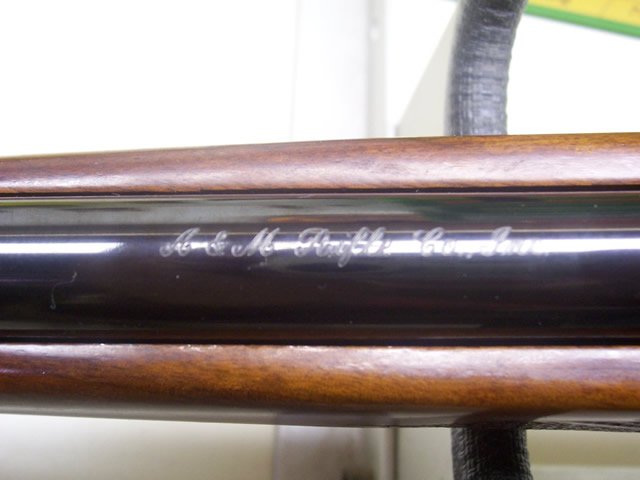
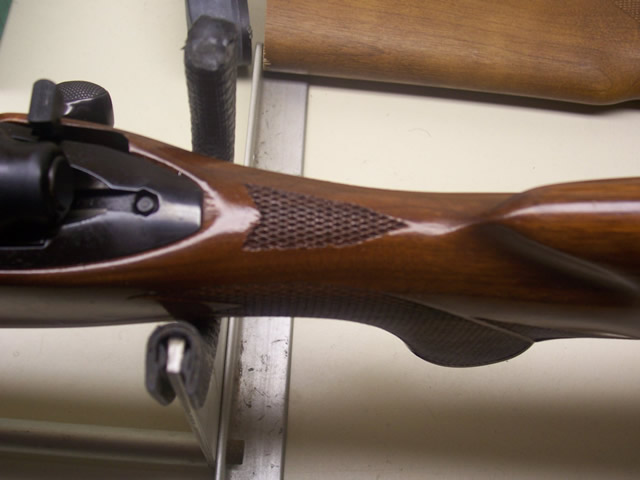
As fortune would have it, good fortune in this case, I was contacted by a friend of mine who works part-time in a gun shop in Pennsylvania when they traded in an odd rifle. His questions of me were initially trying to gather information in order to determine if he wanted to keep this rifle for himself or place it in the rack for sale with a fair market value price. I wasn't certain what fair market value was, but was able to give him enough information on this particular chambering to determine that he did not need this rifle. I did express interest in the rifle and asked that he let me have first shot at buying it. After a few e-mail exchanges, a description of the rifle condition and features, an agreement on price was reached and I asked him to hold it for me until we could close the deal. As the holidays came around, we made arrangements to meet one weekend evening so that I could pay for the gun and fill out the necessary paperwork that would entitle me to call it my own. Upon inspection of the rifle, I was unsure if it had ever been fired. I'm still uncertain after cleaning the rifle and inspecting it well. It is built on a Remington model 700 action with a low serial number (73835), the barrel is engraved elegantly on the top with the words A&M Rifle Company and on the side in typical fashion with the chambering .17 Javelina.


Javelina2.jpg


Javelina3.jpg


Javelina4.jpg


Javelina5.jpg


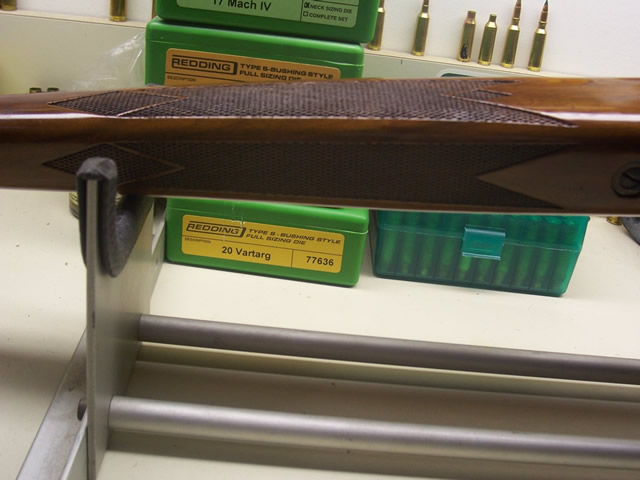
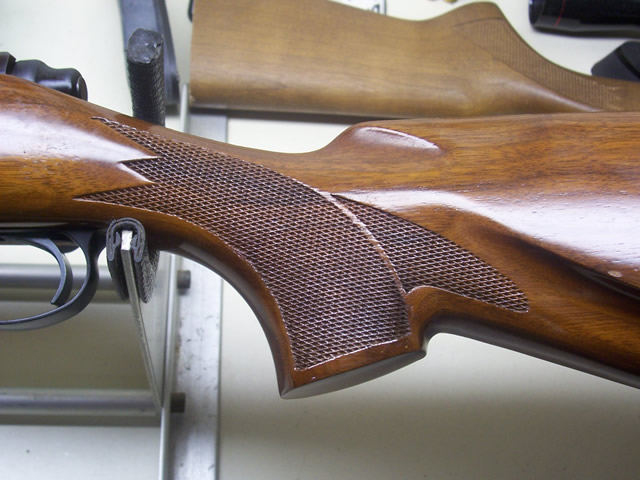
I have tried to capture this engraving with my digital camera to show here and apologize in advance for these photos as I found it difficult to get a good close-up picture of these. I will try to get some better lighting and get some better photos at some point. The stock has stamped checkering of the likes I've not seen on other older Remingtons, on the tang area and the grip and on all 3 sides of the forend portion of the stock. The barrel is blued nicely and the overall condition of the gun is very good considering its age. A few light handling marks on the stock, but the metal appears to be near perfect. The bore is bright and clean, the bolt face looks new without any signs of firing, and everything appears original as it left the A&M Rifle Company of Prescott AZ many years ago. I'm not certain of the age of this rifle, I can get a rough idea by looking at the serial number but have not done so at this time. I am also uncertain of the chamber dimensions, and will probably do a chamber case. I have a standard Redding FL die for sizing and a Wilson seater die as well as a Wilson neck die. I already own a .17 Javelina that I had made some years ago that has been a favorite varmint rifle since I had it built in 2001 by Bob Green or York, PA.


17calibers.jpg


As far as case capacity, the photo above shows the placement of the Javelina among the other small caliber variants, between the Mach IV and the full size .17-222. The javelina is made from either .222 or .223 parent brass.


According to the load data in Todd Kindler's "Sensational Seventeens" loading manual, H4895 is a top performing powder in this cartridge. While I've not personally tried this powder in mine, I've had good results with n135 and Tubal 3000. I realize that Tubal 3000 is a powder that now falls into the category of unobtainium. I have a couple of jugs of this powder in my possession and it seems to work well in this cartridge. I have also used n540 which has given me mixed results. I would like to tinker with this powder more for the 30 grain bullets but have not done so yet. All of my experience with this cartridge thus far has been with a custom rifle that I had built using a Remington 700 Classic that was originally chambered in .17 Remington, but has since been re-barreled with a 1-9" twist PacNor stainless barrel with a reamer made to my specs by Manson with little freebore intending to shoot the 27 - 30 grain bullet high BC bullet offerings. This rifle has long been a favorite varmint rig, accounting for many critters from foxes, to woodchucks, to crows, to prairie dogs, to ground squirrels.


I've formed 50 pieces of brass so that they have just enough resistance to ensure good contact on the shoulder of the case during fireforming. Without knowing the neck dimension of the chamber, I will probably load up a case or two with 8 or 9 grains of Unique powder with a toilet paper wad on top to hold the powder in place, fireforming the brass and then measuring the resulting neck O.D. taking into account a little springback to get the rough chamber size. I've rummaged through my reloading bench and scrounged up a set of Burris scope rings and will mount a B&L 36x scope on the gun for preliminary load work until I can decide what scope to put on the gun for the long term. Spring is just around the corner and I spotted my first ground hog of the season 2 days ago so it is time to get this classic gun up and running. I've also still got to do something with the trigger on this thing, it is truly horrendous even compared to the triggers on rifles from the factory today.


I am hopeful that the A&M rifle that I have just added to my collection will be just as enjoyable. I will be testing it soon, as the weather breaks, and possibly even shoot it in the spring postal match.
 
300 Whisper? SHHHH​


Well, I believe that the .300 Whisper has been one of the best kept secrets in handgun shooting/hunting. I picked up a barrel from Bullberry some time ago for my contender but hadnt found any time to get it out and shoot it. I also wasnt ready to scavenge the Burris scope off of my .17 ackley hornet barrel. I recently had the opportunity to shoot it at the range a couple of times and to take it hunting this year. I have been so pleased with it that I figured I would share my experiences here. Before we get started, Ill share a picture of my .300 whisper.


Image178.jpg


Image179.jpg


I was looking for a handgun that was accurate, pleasant to shoot, and effective on deer-sized game. My first attempt at getting a hunting handgun was a learning experience it was a T/C encore with a 15" .308 barrel. It was big, clunky, and had a mean bark followed by the recoil bite. I got a 7TCU barrel in between and it may have been a good choice as well, but the specimen that I had obtained was not exactly perfect. So that led me to the .300 whisper or .300-.221 as it is also called. This cartridge was developed by JD Jones of SSK industries. JD developed this cartridge to shoot long, heavy bullets at subsonic speeds: hence the name Whisper. But it does an equally good job of shooting the lighter bullets at supersonic speeds with amazing efficiency. If you look in the loading manuals for the .30-.30 with a 14" barrel, you will see 2100- 2200 fps with a 130 grain bullet. With much less case capacity, I am able to achieve 2150 fps out of my 14" barrel with a 130 grain Hornady SSP bullet.


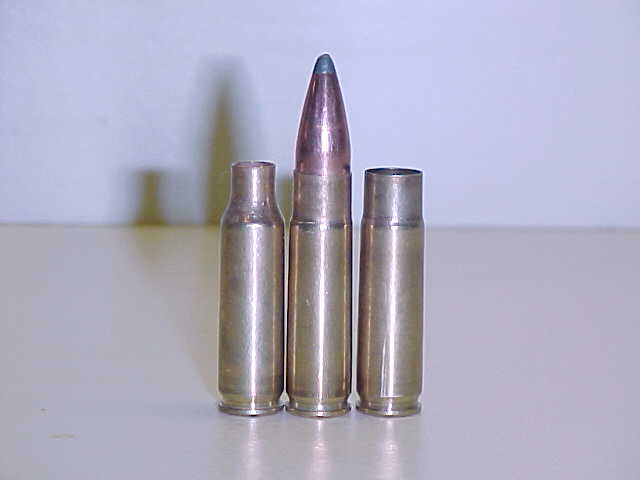
Forming brass is quite easy as well the Redding .300-.221 die set that I bought included an extra expander button that would be used to expand the size of the case mouth to approximately .260 from the .224. Then the original expander could be replaced and finish necking up the case to .308. Imperial Sizing Die wax is a critical component to this operation as well as a strong reloading press I use a Rockchucker for these tasks. I took a picture of the cases from left to right are: .221 fireball (parent case), formed case loaded with 130 grain bullet, and fireformed case. You can see that it almost looks like a straight wall pistol case when it is formed, with very little shoulder.


Image180.jpg
.


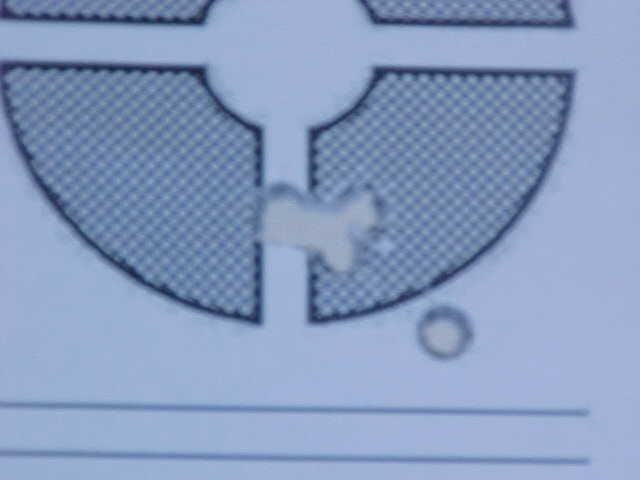
It is a little difficult finding load data for the .300 whisper but I found a little to go by and started to work up a load. I have only 49 pieces of brass formed for this gun which should prove plenty unless I decide to take it out west for prairie dogs. I chose to use the Hornady 130 grain SSP bullets because that is what I had in my cabinet. I had bought them to use in the .308 and had used a few of them in it until I abandoned that barrel. I also chose to use H110 powder which is the fastest burning powder that I had ever used. I loaded up my 49 cases with increasing charges until I got to a maximum of 18.3 grains. Some reported using charges of H110 of up to 18.5 grains but I found the 18.3 grains to be my most accurate load and didnt feel the need to pursue any additional velocity that the .2 grains might offer. At 18.3 grains, the primers are slightly cratered and flattened. The case extraction is not tight, and the contender frame doesnt hesitate to open. I shot the loads with the increasing charges getting a feel for the gun and shooting some groups. I was pleased at the accuracy of the groups that I was getting as most were 2" or less at 100 yards. When I got to the 18.3 grain load, I fired a five shot group that measures less than an inch and impressed me more than words can express. You can imagine my delight when I walked down range to see this group, as with a 7 power handgun scope, I cant see the .30 caliber holes at 100 yards. Shown below is a picture of the target.


Image181.jpg


Now for the pleasant part, you can shoot this thing all day long, as it has very little recoil. I wouldnt have dared to take the off-hand shots with the .308 encore that I have taken with this gun already. The other thing that is very pleasant is the relative low level of muzzle blast that is an accepted nemesis of the handgun. I was surprised at the relatively small crack that the whisper had to offer. I dont know how to compare it to other shots, but I would certainly say that it was no more than my .270 rifle that I have hunted with for years. I had every intention of using hearing protection with this gun while hunting but we all know how things happen in the woods. My first experience with the whisper was on opening day of deer season on the Maryland firearms opener. I decided to carry the handgun exclusively and leave all rifles at home for this year. I had set a goal for myself to shoot a deer with a handgun and I was gonna make it happen this year.
 
300 Whisper Part 2
Since I hunt from a climbing tree stand, I chose to carry a walking stick to use as a rest. I set off early in the morning for my tree stand and climbed up my tree and got set up well before first light. Just as it was beginning to get light, I heard some motion coming from behind me. It was still a little early to see, but I knew that they were coming my way. As luck would have it, the wind was not in my favor. Multiple deer caught my scent and decided that they had better change their intended route. I was a little disappointed at the lost opportunity but sat tight. Just then I heard something coming from the other direction but still couldnt see anything. Then I caught a glimpse of a red fox making its way through the woods. I was not quite ready to get a shot and he never waited around long enough for me to get on him. The low light conditions are not a handgun hunters best times, as the LER (long eye relief) scopes dont gather light like a rifle scope does. It wasnt long before I had an additional visitor. This time it was a big raccoon that was meandering its way through the creek bottom that I was hunting. I had not intended to shoot a raccoon in the prime morning hours but with my blown opportunity at first light, I was feeling like it wouldnt hurt my chances. When the raccoon jumped up on a log, not 15 yards from the tree that I was in he caught me moving to try to get a shot. There was a branch in the way and there he sat staring at me waiting for a move. I sat still and eventually he figured that I wasnt a threat. He moved a little further up the log offering me a perfect shot. I held the contender off hand and centered the cross hairs on his back between as he was quite a bit below me. I slowly squeezed the trigger and fired the shot. At the shot, the raccoon was knocked off the log and quickly expired. I had put in my ear plugs for this shot and didnt like the idea of having to put in hearing protection before each shot opportunity. I certainly couldnt hunt while wearing hearing protection.


I sat there for a few more hours with a few deer sightings at great distances through the entanglement of the thick woods which would never offer a shot. At around 9:00 in the morning, a number of deer came running through the woods towards me. I could hear them well before I could see them. One of the deer stops in a small opening about 75 yards away. It is behind me so I am standing in my tree stand and I rest the gun up against the tree that I am in. I steady the gun and settle the crosshairs just behind the shoulder. I gently squeezed the trigger (2 lbs), and fired the shot. After the shot, the deer ran off but I was confident of the hit. As all of the deer ran in different directions, a smaller deer made its way right to me. I hadnt had time to remove the spent shell and replace with a live round before it was 15 yards from me. It caught me loading the gun and sat there and stomped its feet for a bit. It was upwind and had no way of detecting me other than sight. The tree was at my back and I remained motionless until it decided that there was no harm. It continued on its way until I had a perfect opening. Only this time, I was standing and had nothing to steady the gun with. I held up the contender and settled it on her shoulders and squeezed the trigger. Again, this deer ran off but I could tell that this deer was definitely hit. In the thick creek bottom, I was only able to see her go for 50 yards before she was out of sight. On the two way radios, my hunting partners chime in, "What is all of that shootin up there?" I tell them briefly that I would get back to them after I got down and checked it out. When I got down to look at where the second deer was standing when I had shot, the blood trail was plain to see. I followed the trail towards where the first deer was standing when I had shot it. There she lay, hit through both shoulders where I had aimed, bullet exited. I had no problem finding the blood trail from the first deer either, and it had not gone far either. The second deer was hit right behind the shoulders with a perfect double lung shot. A laser range finder was used afterwards to measure the distance, 80 yards.


I never had the time to put in hearing protection for the shots on either of the deer and the muzzle blast was not at all unpleasant. I know that the adrenaline was flowing but if I had been shooting my .308 barrel, I am sure that I would have been ringing for hours. I value my hearing and dont at all suggest that you shoot without hearing protection. When possible, I will wear hearing protection with the .300 whisper while hunting, but when time will not allow I will be thankful that I am shooting the whisper and not latest- greatest super magnum.


Neither of the deer that I shot may be considered trophies, but the experience will not soon be forgotten by me because they were taken with the handgun. It provides the extra challenge to rifle season that I have been looking for.


The .300 whisper is a keeper and I am sure that it will be a favorite of mine for years to come for deer hunting. I may not be able to shoot a 200 grain bullet at 3200 fps, or use up 70 grains of powder and cost $2.00 a shot, but Ill bet that itll be just as effective for my intended use.
 

Long Range Handgun​


17reml1.jpg


It all happened as a matter of circumstance. About a year ago, I was at the range with my Encore 15 .308, and there was a fellow at the bench next to me with a .223 Contender. After we talked for a bit, I offered to let him shoot the .308, which he did. I was shooting 168 grain bullets behind a stiff charge of Varget stiff recoil, too. He was impressed with the accuracy and balance of this Encore, but not so impressed with the trigger.

In turn, I got to shoot some clay discs (trap-shooter targets) with the Contender .223. He had placed them on the dirt of the backstop at a distance of about 105 yards. My first shot looked at first like a clean miss, but through the spotting scope I saw I had punched a clean .224 hole dead through the center of that disc. I cleanly dispatched a number of these clays without missing a single one.

I didnt know it at the time, but I had to have one of these Contenders. The most remarkable things about that gun were the low level of recoil, and the very nice trigger pull. The trigger was light, crisp, and clean as opposed to my heavy, lawyer-proof, Encore trigger (since reworked to a crisp 28 ounces by Fred Smith at Bullberry).

I didnt own a Contender frame, but because of rumors (since substantiated by T/C) that Contender production would soon be discontinued, I felt that I needed to get one while they were still available. I was hampered a little by a new Maryland law that requires all handguns to be accompanied by a fired shell casing a little difficult with just a frame. Virgin Valley Custom Gun found a frame that was manufactured before 10/1/00 and thus was exempt from the new law, so I bought it. I had the frame sent to my FFL and was able to retrieve it from him in about 4 weeks from time of purchase (waiting period plus shipping time). My FFL, Rod Ellingsworth, an accomplished gunsmith, reduced the trigger pull to the desired 1.5 lbs.

Later, Virgin Valley Custom Guns offered me a deal I couldnt resist on a .17 Remington barrel for my new frame. The barrel is a stainless steel, matte finish, 15-inch bull barrel with a Virgin Valley scope base installed with 6 screws. I am still not sure why I need 6 screws to hold the scope on this barrel, but I dont think that they hurt anything. The 10 twist on the barrel should be fine for bullets up to 30 grains, and I intend to use mainly 25 grain bullets in this barrel.

I have printed out a ballistic chart for my gun with the 25 grain Starke bullets to show what it will do at extended ranges. Since I am hoping to be able to take long shots with this gun, I need to know how much it would drop at the longer ranges. Realistically, I want to be able to shoot ground hogs to 200 250 yards with this gun. I have a small copy of this chart that I can tape to the fore end when going afield. My chart was created using a free software program called PointBlank, available from www.huntingnut.com. It is very useful and easy to operate not to mention free.

I ordered a Burris 3-12 EER for the project, but I just couldnt wait for it to arrive, so I started out with a Burris 2-7 EER scavenged from the Encore mentioned earlier. Burris is the handgun scope as far as I am concerned. When you are looking for a highpower handgun scope, this is the only real option that you have, and it is a good one. The 3-12 power scope is great, the eye relief is sufficient, and the field of view is excellent for such a powerful scope. I got the fine plex and the target knobs for some serious long range shooting. The high magnification is almost imperative for shooting accurately at long ranges with a handgun.

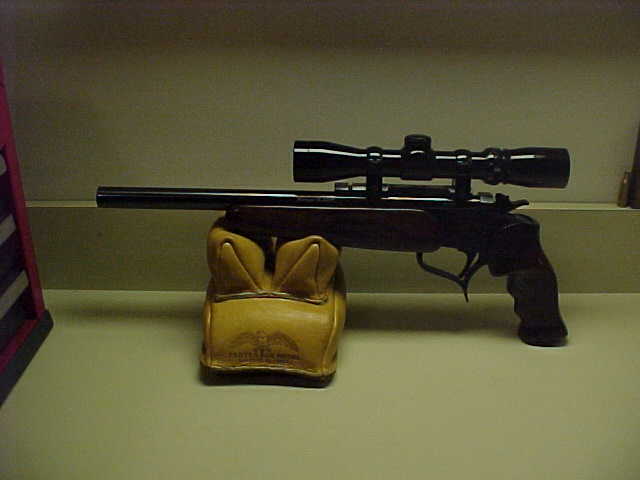
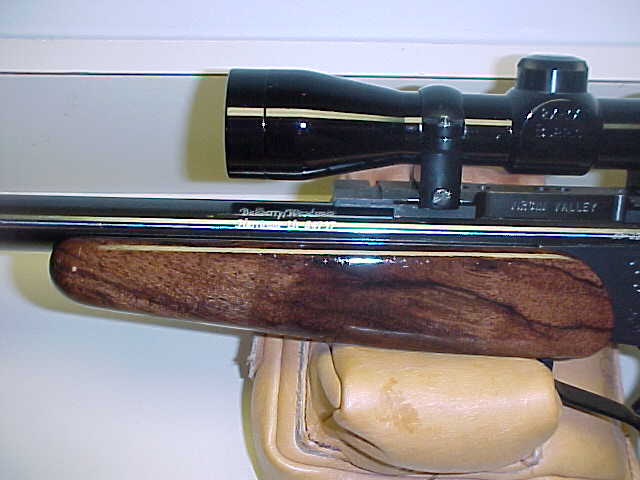
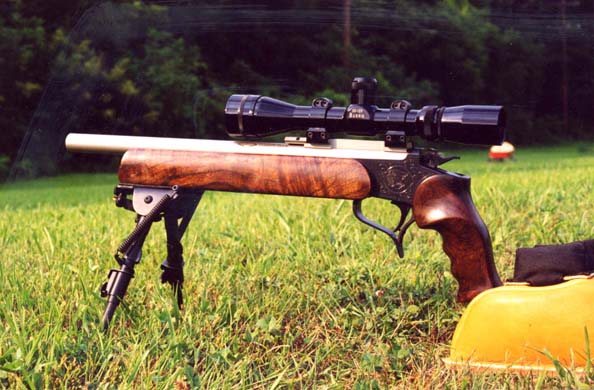
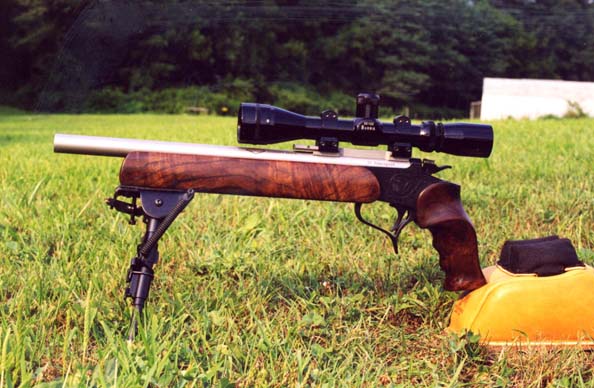
I got a nice target style fore end 11 long, flat and about 2 wide for use in the bags or use with the short Harris Bipod (Model BR) I installed. The grip and the fore end are both from Bullberry/Woodsmith. They were inletted to fit perfectly and are fantastic looking (See picture 1).

All of those Warmth of Wood articles by Gary Ramberg must have gone to my head because I came up with the bright idea that it would be nice to finish the stock set myself. I ordered both the fore end and the grip in a semi-finished condition. I thought it would be fun to finish them myself, but after about 3 weeks of sanding and finishing decided that it might be more fun to have them done.

I applied 6 coats of Tru-oil finish to the stock with my finger, using 0000 steel wool between coats. It looked good, but I was having trouble getting all of the grain to fill. At this point, I was frustrated and turned for help yeah I know its like stopping at a gas station to ask directions. I turned to my favorite internet message board, GoGoVarmintGo, explained my dilemma and got several responders. I learned from Claude Gatewood of Gatewood stocks that I could use wet/dry sandpaper to apply the oil with a sanding motion to fill the voids. I did this and it worked perfectly. I tried Arm-R-Seal in place of Tru-oil on the fore end and am very happy with the results. The grain was filled, and I achieved the rubbed oil finish that I wanted. I think I will enjoy the wood more knowing I finished it myself, and I hope to finish a one-piece stock in the future.

I experienced some difficulties with my scope mount system. The VVCG base seems to be undersized compared to the Weaver base. This requires the Burris zee rings to be tightened excessively, and they loosened on two occasions under the mild recoil of the .17. As per the recommendation of Virgin Valley Custom Gun, I tried the Warne rings and have experienced no additional problems to date. I actually like the Warne rings more than the Burris, due to their ease of installation and removal.

I wish I could tell you that I spent hundreds of hours trying 4 different powders and 5 different bullets, but that just isnt the case. I had every intention of trying a few different powders and a couple of different bullets, but with the results that I had with the first combination, I decided that the time would be better spent looking for groundhogs or working up loads for other guns. The added bonus of the load that I settled on was that it was the same load that my Remington model 700 prefers: 24.2 grains of IMR4320 behind a 25 grain Starke RPVB.

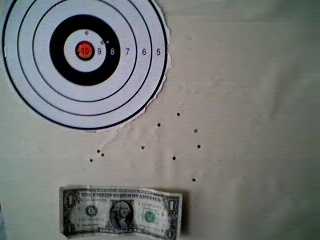
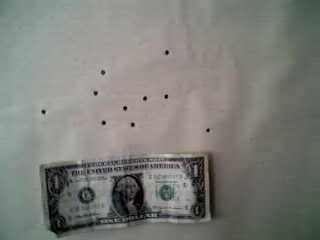
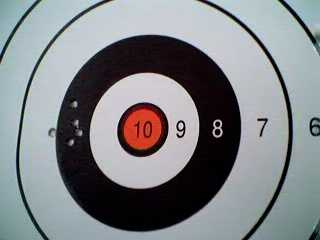
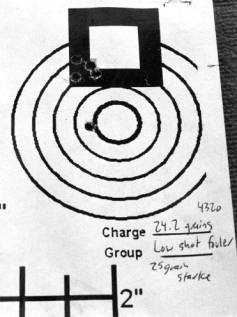
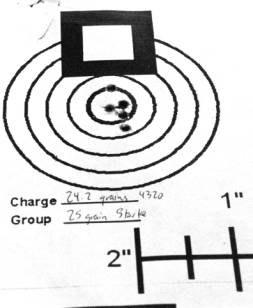
The average velocity of the preferred load was 3640 fps (pretty impressive out of a stubby barrel handgun). I found that the gun would shoot less than an inch routinely and could shoot close to 5 shot groups at 100 yards. (See pictures 2&3).

17reml2.jpg
17reml3.jpg


The range that I usually shoot at only allows shooting out to 100 yards, but I intend to set up a little range at my brothers farm for some 200 yard shooting to see how it will do at the extended range. I want to be able to reach out to 200 yards when hunting and to feel confident in this little gun. According to the Pointblank software program (www.huntingnut.com), if I am sighted for 100 yards, the drop at 200 yards is 2 inches and at 300 yards is 9 inches. Seen below is some information generated from Pointblank software program for the hand loads.


Name: .172 Cal, Starke HP, 25 grn

Ballistic Coeff: 0.200

Bullet Weight: 25

Velocity: 3650

Target Distance: 100

Scope Height: 1.500

Temperature: 70

Altitude: 500


Ballistic Data

~~~~~~~~~~~~~~~

Range Elevation Velocity Energy ETA Drop

100 yds 0.00 in 3136 fps 546 fpe 0.089 sec 1.45 in

125 yds -0.14 in 3017 fps 505 fpe 0.113 sec 2.32 in

150 yds -0.51 in 2901 fps 467 fpe 0.138 sec 3.43 in

175 yds -1.14 in 2789 fps 432 fpe 0.165 sec 4.80 in

200 yds -2.06 in 2679 fps 398 fpe 0.192 sec 6.45 in

225 yds -3.28 in 2571 fps 367 fpe 0.221 sec 8.41 in

250 yds -4.82 in 2466 fps 338 fpe 0.251 sec 10.68 in

275 yds -6.70 in 2364 fps 310 fpe 0.282 sec 13.31 in

300 yds -9.00 in 2264 fps 285 fpe 0.314 sec 16.34 in

When time will allow, I still plan on trying some Vihtavouri n135 that I had gotten for this gun a while ago, just to see if I can get the velocity up a little more.
 
Part 2
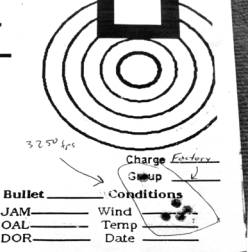
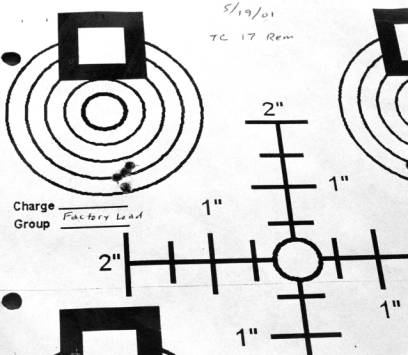
During one of the days of range testing, I had decided to shoot some Remington factory-loaded rounds that I had in my safe collecting dust. I figured that I would test them for accuracy and velocity with this gun to see how it compared to my reloads. I got quite a surprise from both the chronograph reading and the accuracy results on paper. I figured that they would be fast stepping loads, but the average velocity reading over the 10 shots was only 3250 fps as compared to 3640 fps with the reloads (See Pictures 4 & 5). I was very surprised at the slower velocity of the factory ammunition. I would have been expecting 100 fps lower velocity at the most.

17reml4.jpg
17reml5.jpg


Now for the pleasant surprise: both 5 shot groups measured less than an inch much less than an inch! One measured 0.89 and the other measured 0.36 out of a handgun no less! The POI was approximately 2 inches lower than the reloads I had the gun sighted in for, but they still printed on the paper. If I needed to use factory ammo in this gun, the POI would be 3 inches low at 200 yards and 12.5 inches low at 300 yards (assuming that I adjusted the scope so that the POI at 100 yards was on target). Seen below is a chart generated from Pointblank software program for the factory loads.


Name: .172 Cal, Hornady HP, 25 grn

Ballistic Coeff: 0.200

Bullet Weight: 25

Velocity: 3250

Target Distance: 100

Scope Height: 1.500

Temperature: 70

Altitude: 500


Ballistic Data

~~~~~~~~~~~~~~~

Range Elevation Velocity Energy ETA Drop

0 yds -1.50 in 3250 fps 586 fpe 0.000 sec 0.00 in

25 yds -0.77 in 3128 fps 543 fpe 0.024 sec 0.11 in

50 yds -0.27 in 3009 fps 503 fpe 0.048 sec 0.43 in

75 yds -0.00 in 2893 fps 465 fpe 0.073 sec 1.00 in

100 yds 0.00 in 2781 fps 429 fpe 0.100 sec 1.83 in

125 yds -0.28 in 2671 fps 396 fpe 0.127 sec 2.94 in

150 yds -0.86 in 2564 fps 365 fpe 0.156 sec 4.35 in

175 yds -1.77 in 2459 fps 336 fpe 0.186 sec 6.09 in

200 yds -3.03 in 2357 fps 308 fpe 0.217 sec 8.18 in

250 yds -6.80 in 2160 fps 259 fpe 0.284 sec 13.62 in

300 yds -12.41 in 1972 fps 216 fpe 0.356 sec 20.89 in
 
Part 3

While looking at the groups shot, I noticed a large number of shots were outside of the group. I was first attributing these flyers to a bad load or even from being the first shot from a clean barrel. What I found was that the first shot was a little lower in velocity, but usually only by 30 50 fps, which wouldnt account for the vertical dispersion that I was experiencing. After determining that the velocity wasnt the cause of the vertical dispersion, I was unsure what might be causing the problem. I think that the vertical dispersion is occurring from my gun handling technique while shooting the handgun from a bench. I have been using the bi-pod and then resting the grip of the gun on the edge of a rear sand bag. I would press the grip into the bag to ensure a solid hold on the target (See picture 6 below). This technique was very effective at keeping the gun still during the trigger squeeze but was not allowing the gun to recoil consistently. I will need to do some further testing with a different method of holding the gun to prove this theory, but I think that the gun handling is to blame for the vertical dispersion in the groups shown. Every group fired has more vertical dispersion than horizontal which is odd for any gun much less a .17. I would like to shoot this gun using a flat rear bag that can allow the gun to recoil consistently. I may also try using a front rest in place of the bi-pod to see if that reduces the vertical dispersion. If all else fails, I may resort to shooting 3 shot groups (Sarcasm noted).

17reml6.jpg


I hope to use this handgun for ground hog shooting out to 200 yards. For any shots further than that, I will switch to one of my longer-barreled .17s until Ive had more long-range practice with the handgun.

This project would be a great choice for somebody just starting to get into reloading or somebody with an interest in varmint hunting with a handgun. It is also nice to be able to shoot factory ammo in a pinch. It is easy to shoot, the recoil is low and the enjoyment is significant.
 

Bill Eichelberger Interview Jan/2004​


Interview with Bill Eichelberger on the “Extreme Small Calibers”. Bill Eichelberger is probably the go-to guy, the guru, the authority on the small calibers. His experimentation with the .14’s, .12’s and .10’s has been extensive, and I would like to thank him for this effort and recognize him for the work that he has done.


How long have you been working with the small calibers (less than .172 cal)?


It was in the early 1970’s that I started getting serious about small calibers, particularly the .14’s. That interest was influenced very much by chatting with a lot of folks the likes of Boots Obermeyer, John Walker, Bill Key, Bob Carpenter, and Jim Cuthbert. During this time I also managed to be in contact with some folks that were doing some things with .14 calibers. As I recall, these were Tim Bolinger of Matco, Asa Davis, Bob Alenxander of Viper Copper and Brass, and Chuck Richardson of DKT Industries. Nobody had a lot of information but we were all in the same boat toying with the project of making the .14 calibers work.


What is it that got you interested in experimenting with the small calibers? Many consider you as the pioneer of the really small stuff, what is it that made you try these small calibers?


Experimenting with the small calibers was just something that I thought a lot about and I was intrigued with the possibility of shooting small caliber ultra lightweight bullets at high velocity. In the beginning, some times things didn’t work as planned and as I said before, it was a bit frustrating because there was little reference material or information available. In fact, early on I gleaned a lot of valuable information through talking with Bob Carpenter who had worked on the Army’s .14/.222 cartridge at their Aberdeen Proving Grounds in Maryland. In addition to my efforts, there were others doing some pioneering efforts in the .14 caliber arena as well. If I may indulge in a bit of trivia… Asa Davis, Bob Alexander, Chuck Richardson and I each had developed a .14 caliber cartridge based on the .32 ACP case and we each referred to them as “Our .14 Flea”. A bit later I had managed to collect copies of the cartridge drawings from each of these three gentlemen of their .14 Fleas. Although there’s not that much you can do different with the stuffy little .32 ACP cartridge case, each one of “our .14 caliber Flea” designs were a bit different.


What is the practical limit with respect to bore size? Is .10 caliber as far as you’ll go or have gone?


The .10 caliber is as small as I intend to push it. I had started to develop tools, dies, etc. for an 8 caliber Eichelberger Pup, which was based on the CCM Cooper case, but have abandoned it for personal reasons.


What are your favorite cases for each of the small calibers? (.14, .12, .10)


I want to say these are my favorite cases, but I think they are also the ones we’ve had the most success with. Quite simply they are the…
Eichelberger .14/.221
Eichelberger .12 caliber H&R Mag
Eichelberger .10 caliber squirrel.


What is the useful limit of each of the small calibers in distance and energy? (.14, .12, .10)


Since I begun developing small calibers, there’s been more written about this and much of the info is based on case capacity, bullet weight and so forth. Personally, I generally limit my shooting of the .10, .12, and .14 calibers to about 50 yards whether I’m shooting at paper targets or small varmints and nuisance birds.


For what purposes do you consider the really small calibers good for?


Personally I derive a lot of satisfaction from punching small holes very close together in paper. As for varmints, they work well on ground squirrels, small tree squirrels, and starling to pigeon size nuisance birds.


What caution would you give a reloader who had interest in shooting one of these very small calibers?


For openers, all the safety guidelines for reloading of any kind apply as well for the small calibers. Powder charges must be measured precisely to the 1/10th of a grain and all powder must get into the case. This is very important in small calibers because of the high pressure that builds in the shoulder and neck area of the case as it drives the bullet down the small bore. A couple of tools we’ve found that make this much easier to accomplish are a RCBS Powder Pro Digital scale working in conjunction with a RCBS Powder Master Electronic Powder Dispenser. This equipment makes it possible to precisely measure powder charges to the 1/10th of a grain and confidently duplicate small powder charges over and over. Once you’ve weighed the powder charge, the next challenge is to insure that it all gets into the very small mouth opening of the case. To accomplish this, we have made up dedicated powder funnels with the opening in the funnel machined for the particular case/caliber.


What would somebody need to do to get into the small caliber shooting world? (bullets, barrels, dies, reamers, cleaning supplies, etc.)


Getting started in the small caliber shooting world will require all of the items that you have listed above and as you get into the small caliber arena a bit further you’ll find that making up tooling customized to your operation will occasionally be necessary. Unfortunately, there is no single source you can go to and obtain all of the needed equipment and components. My original plans were to have a small caliber shooters supply shop, kind of like a supermarket, where you could do one-stop shopping and obtain all of the components and tooling you would need to put together a small caliber rig. Unfortunately, for personal reasons that didn’t come to be.
 
Eichleberger Part 2


It seems that the .14’s have been used with some success by at least one predator hunter, what would you consider to be the smallest case .14 that should be used for effective predator hunting and what range limits?


Blaine Eddy sure has had a great deal of success with his little .14/.221 rig. It pretty much depends on the size of the predator you’re looking to take, your shooting ability and at what distance you want to shoot the critter. Although the .14.221 is my choice for all-around shooting, most of the cartridge configurations based on the .22 Hornet can work pretty well also.


I realize that you use solid machined bullets for the .12’s and the .10’s, do they cause any pressure concerns over a copper jacket lead bullet?


I’ve shot .10, .12 and .14 caliber copper jacket lead bullets as well as solid bullets and we’ve noticed little difference with chamber pressure or down-range performance between the two.


I currently have a .14 caliber reloading manual from you, what other manuals or products do you offer for sale to small caliber shooters?


We managed to put together 4 different manuals about our small caliber cartridges. I want to stress that the info in the 4 manuals is just for the Eichelberger cartridges we have developed. These 4 manuals are:
Eichelberger .10 and 12 caliber Reloading
Eichelberger .14 caliber reloading manual
Eichelberger .17 and .20 caliber reloading manual.
Eichelberger Small Caliber Cartridges *
(* contains dimensioned cartridge case CAD drawings for .10 caliber through .22 caliber)


What is your favorite small caliber?


This question is like asking me what kind of donuts are my favorite – I like them all!! Seriously, in thinking about this, I’m not sure I have a favorite small caliber or even a favorite small caliber cartridge. The .10 calibers have caused quite a stir, but I think our .14 calibers have provided us with the most challenge, fun and satisfaction. Many of the .14’s were developed with a particular goal and/or use in mind and at the time we were getting tooling, etc. together and I enjoyed that a lot. The bottom line is: I guess I like the whole bunch!!
 

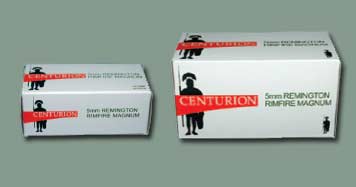
The Centurion 5mm Remington Rimfire Magnum​


"Do you know this cartridge?"​


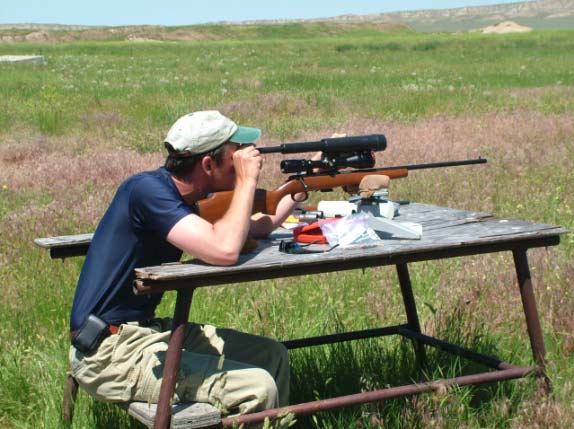
Such was the question that came up during a congenial dinner during the 2004 SHOT Show with our friends at Aguila Ammunition and Centurion Ordnance. Efrain Peralta, the Chief Engineer for Aguila Ammunition, then held out a note book to writer Tim Mancillas and I, depicting a perfectly hand drawn blueprint of the long discontinued 5mm Remington Rimfire Magnum cartridge. Tim and I both looked at each other and grinned. "Yes, we know this cartridge" I said. "We're both 5mm shooters." And so it began.


The rest of the evening was spent discussing manufacturing techniques and pressures, as well as the potential for the revival of this obsolete rimfire. By the time we called it a night the table was littered with cocktail napkins covered with drawings, performance figures and rough R&D investments. Carlos F. Romero, the CEO of Centurion Ordnance and Mike Realme, of Centurion's Logistics Department went from intrigued by this round but some what skeptical of consumer demand. By the end of the evening, however, they were amazed that there were so many rifles out there that had no readily available supply of ammunition. Mr. Peralta thought it feasible from a design and production perspective so Tim and I were understandably enthusiastic. The prospect of reproducing the 5mm again was intriguing but no one was ready to make any promises just yet.


5mm1.jpg


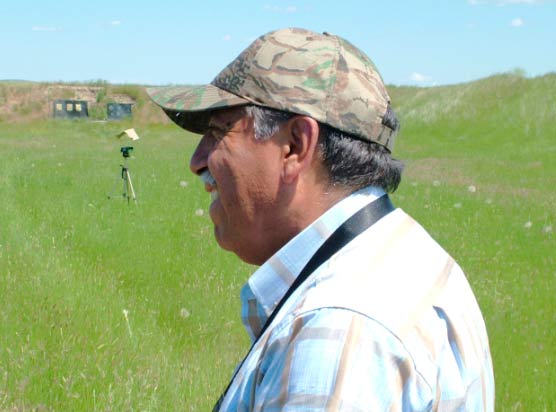
Chief Engineer, Centurion Ordnance, Efrain Peralta
(June 2007 prototype ammunition testing)​


Originally produced for the Remington 591M and 592M rifles in 1970, the 5mm Remington Rimfire Magnum was a Remington Arms attempt to market a high velocity, high pressure rimfire hunting cartridge. This bottle-necked case was capped with a .2045" diameter 38 grain Core Lokt™ bullet that attained 2100 feet per second from the ultra strong 590 series rifles. The 22 Magnum of the day fired a 40 grain bullet at 1910 feet per second and the then-new 5mm round out stripped it for power and accuracy. To do this, however, the cartridge generated pressures nearly twice as high as the 22 Magnum and 22LR cartridges. It was a revolutionary rimfire cartridge but when Remington's interests turned elsewhere in 1973 the production of rifles ceased with the ammo being dropped from their line-up eleven years later. This left an estimated 50,000 rifles (and nearly as many devout 5mm shooters) without ammunition. Five millimeter shooters have been searching out and hording this ammunition ever since.


5mm2.jpg


Vintage Remington Model 591 with Centurion 5mmRRM
Initial field test of production ammunition, Swift 3-9x40mm scope​


During subsequent meetings with our friends from Aguila and Centurion Ordnance, the 5mm topic was raised at regular intervals. It was while attending the 2005 SHOT Show that Carlos F. Romero, the CEO of Centurion Ordnance told us that they were seriously considering producing the 5mm cartridge on a trial run basis. He pointed out that Centurion Ordnance was getting more requests for the 5mm weekly and they seemed to be going up as the remaining supply of original 5mm ammunition dwindled. Centurion was not the only outfit that recognized the demand for this cartridge. It is interesting to note that while we were attending the PMC sponsored shooting event for the SHOT Show that year, a major distributor approached Carlos, and confronted him with rumors of the 5mm work. "Hey Carlos, I hear you guys are thinking about producing the Five mm." The gentleman said. Carlos responded "Well, we have been considering it, but we have no plans right now." The gentleman replied, "Carlos, if you do, we'll take the first 2 million rounds. And I'm serious." This was a major distributor that many readers are familiar with, so it left no doubt in Tim's and my mind that he was dead serious. Carlos said that he would keep that in mind if anything ever came of it, and the gentleman left to attend other business matters at hand. The look Carlos gave us was priceless! One raised eyebrow, and a smile at the corner of his mouth. For Tim and I this was encouraging but there was still no concrete plan or time frame for production. We were filled with anticipation but again, we had to be patient. And so we were.


The 2006 SHOT Show rolled around, involving more discussion but again, no hard assurances. Tooling for a new cartridge was costly and time consuming. It would require careful consideration and the willingness to commit a portion of the production line to the research and development needed to produce a marketable cartridge. We were optimistic but, again, we needed to be patient.


5mm3.jpg


Production Centurion 5mm RRM ammunition
Note: Expanded 30gr JSP rounds retrieved from sand dune at 155yd distance​


Tim was abroad on business last year and missed our annual meeting at the SHOT show. The 2007 Show was held in Orlando, FL. and on the opening day I met with our friends from Helotes, TX and Cuernavaca, MX. As I got into the car in front of my hotel, Efrain leaned over and dropped a small bag into my hand. Inside was a single drawn brass casing and a pair of copper jacketed bullets. I just smiled, wishing Tim was here with me to see these offerings of hope for the 5mm fanatics that have been desperately holding on since production of 5mm Remington ammo ceased twenty three years earlier. I called Tim the first chance I got and told him the news. I remember Tim finishing the conversation by stating in his normal Marine bluntness, that the longest wait would be "from now until we see some finished cartridges in our hands." As always, he was right.


5mm4.jpg


Writer/Gunsmith and ammunition consultant Andrew Moe, June 2007 prototype ammunition site-in and testing​


5mm5.jpg


Writer/Editor and ammunition consultant, Tim Mancillas, June 2007 prototype site-in and testing
 
5MM Part 2

It was a June meeting in Montana that saw the first field testing of the prototype version of the Centurion 5mm Remington cartridge. Tim and I met with engineer Efrain Peralta and Mike Realme of Centurion Ordnance in the sweltering June heat amidst young prairiedogs and away from prying eyes. After our sight in session Tim & I headed out to the fields with Efrain and Mike in tow, watching as we killed 35 prairiedogs with a pair of vintage 592M Remington rifles in the space of just a couple of hours. With each kill, careful examinations of the entrance and exit wounds were made and photographs were taken. No matter what the distance and no matter what the shot angle, an animal hit with Centurion's 5mm Remington Magnum never required a second shot. The farthest shot taken was 160 yards at an overly curious prairie dog who thought he was safe up on a hillside half hidden by his mound. When he stood up to get a better look at us the 30 grain, twenty-caliber bullet flipped him cleanly off of his hole and landed him a foot back into the surrounding sage. The shooting was great but it was especially pleasing because we were shooting the first produced 5mm Remington ammunition seen in nearly two and a half decades. And so we had to be patient again waiting for the production ammunition to be made. And we were.


5mm6.jpg


Prairie dog results with prototype ammunition at 100yds in Montana, June 2007


Finally! Two weeks prior to the SHOT Show, I received a phone call from Carlos. He stated simply, "A package is on the way". Imagine my excitement! Unfortunately, up in here in Montana we were heading into a severe winter storm. The temperatures and conditions were not what one would call "ideal" (to say the least!), with negative degree temperatures and blowing snow, I was a bit frustrated but decided to at least attempt some cursory testing in the field. Meanwhile, I took half of the ammunition and overnight'ed it to Tim. He still lives in southern California, and would have an easier time testing (at least that was what I thought!).


5mm7.jpg


Montana test conditions (-9 degrees and snow), January 2008​


As I headed out the door with the new ammunition, even the wind and snow could not dampen my excitement and anticipation. Though methodical and controlled tests were virtually out of the question, I wanted to see if perhaps a few uneducated rabbits were about (too ignorant to get out of the weather and impending storm), and so a few shots were taken, ranging from 50 to75 yards. The terminal performance was impressive, and an added benefit of a similar zero to that of the prototype ammunition aided in quickly producing results. At fairly close range, the 5mm was.well, as expected.explosive to say the least!


5mm8.jpg


A few days later, (and in much warmer conditions I might add!) Tim was able to head out to an undisclosed location in the desert for some testing. We both had thought that he'd be able to conduct a more thorough test, but alas, he had a full week's worth of rain and wind rolling in! Despite this, Tim attempted to conduct some velocity testing as well as accuracy testing (if the wind gods were willing). Tim had a Model 591M (magazine fed version) and confirmed that the cartridge does function well with the magazine. He also ran 25 rounds of the precious little production ammunition we had, across a chronograph. Surprisingly, in the mild temperatures of the southern California desert, he received an average velocity right around 2400fps! (2393fps to be exact) This was 100fps faster than touted in the press release that Carlos had been gracious enough to share with us in advance. Tim told me that he'd had a hard time conducting accuracy tests due to the gusting winds and a rickety table but managed some decent grouping in spite of that. He offered that testing at a formal range with solid benches would have been more a better way to document the accuracy. Also, he wondered how a current production firearm would perform, as the rifles we were using -though like new- were fairly dated with regards to manufacturing techniques. He stated that with a standard deviation of 18.49fps and extreme spread of 52.88fps the cartridge showed every sign of outstanding accuracy that a precision built rifle could take advantage of. We had both consciously chosen to leave our rifles unchanged or modified. No bedding, no free floating the barrels, no re-crowning or trigger jobs. We wanted an accurate comparison to the older (discontinued) ammunition and as such, did not modify the rifles in any way. Despite this, the new ammunition still performed every bit as well (accuracy-wise) and at lower pressures to boot. We both feel there is definitely room for increased performance in this cartridge despite it already being a marked improvement over the older ammunition. The production ammunition exceeded our expectations, and we feel that shooters will be very pleased by its performance. This initial run of ammunition started out as a way to fill a need for the existing rifles and shooters, but now, is heading down the path of really bringing something new and improved onto the market.


5mm9.jpg


100yd group with Centurion 5mm RRM ammunition
Model 591, Swift 3-9x40mm AO
65 degrees, cloudy, 9-3 wind at 10-15mph, elev. at sea level (SoCal desert)​


For those who held onto their Remington 5mm Rimfire rifles in hopes that someone, someday, would revive this fine cartridge, their prayers have been answered in the Centurion made 5mm Remington. For those of you who wished for a new generation of 5mm rifles and handguns, your day is at hand. There can be little doubt that the reintroduction of this cartridge will produce a new line of firearms to augment the original Remington rifles that might be in a shooter's rack. And with current powder technology, better bullets and a better understanding of internal ballistics, there is yet, more to come! Future development of newer, higher performance Centurion 5mm Remington ammunition is already underway! The future indeed looks bright for this old veteran cartridge.


In closing, it is gratifying to think that a generation of shooters who did not get to enjoy the ballistic benefits of the original 20 caliber rimfire will now get the chance to see it in action first-hand. No doubt a new wave of 5mm enthusiasts will be cropping up soon to carry on the passion and love of what truly is an amazing cartridge. It is said that in Egyptian mythology there lives a great bird known as the Phoenix. The Phoenix would live 500 years and then would burst into flames, arising, reborn from the ashes. And so, like the Phoenix, the Five Millimeter Remington Rimfire Magnum -gone from production for nearly a quarter of a century- has been reborn from the ashes: Refreshed, revamped, and better than ever! Only time can tell what is store for shooters and future releases of the 5mm, but I for one, am confident that it will usher in from the past a new era of rimfire shooting!!!


5mm10.jpg
 
Back
Top